
Reviewed · MILAN BIKE TOURS
Milan: Electric Bicycle Tour Tourist Guide Live – 3 hours & half
Milan reveals itself quickly from two wheels. In three and a half hours, you move from Sforza Castle and Parco Sempione to the canals of Navigli, then into the grand center around the Duomo, covering far more ground than you could comfortably manage on foot.
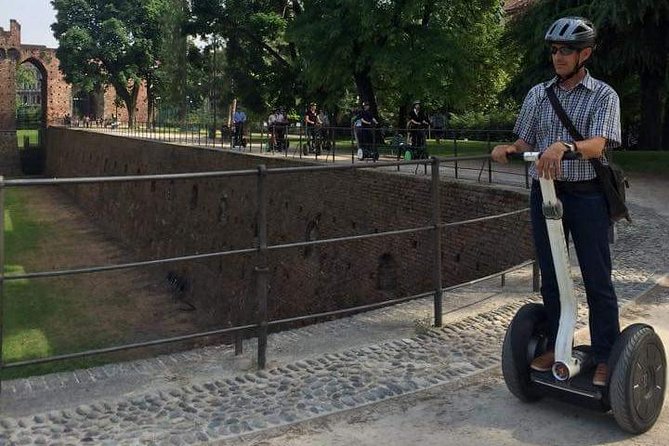
I like the private format, which lets your guide adjust the pace and stop for photos. I also like the route’s mix of famous sights and less polished city corners, including Ticinese, Darsena, and the narrow streets near the center. The main caution is practical: the description calls this an electric bicycle tour but also refers to a Segway, so confirm the vehicle before paying.
Key points to know before booking
- A private route through Milan’s major districts: Only your group participates, so the guide can give more direct attention and respond to your interests.
- Ten central stops in 3.5 hours: The route links Sforza Castle, Sant’Ambrogio, Navigli, the Duomo, La Scala, and several smaller squares.
- A useful first-day orientation: You see where Milan’s historic center, canals, monuments, shopping arcades, and nightlife districts fit together.
- Mostly exterior sightseeing: The tour explains buildings from outside. Castle, Duomo, and La Scala admission is not included.
- A mix of electric riding and walking stops: You cover plenty of ground, but you still need moderate physical fitness.
- Weather matters: Poor conditions can lead to a new date or a full refund, and cancellations by you are free up to 24 hours ahead.
Why this route works well for seeing Milan
Milan is spread out in a way that can make first visits feel disjointed. The Duomo is the obvious center, but Sforza Castle, Sant’Ambrogio, the Ticinese district, and Navigli each give you a different version of the city.
This tour links those pieces in one continuous outing. You begin at Via Lecco, 18, near public transportation, then move through historic districts and major squares before returning to the same meeting point. That return is useful if you want to continue exploring from a known location.
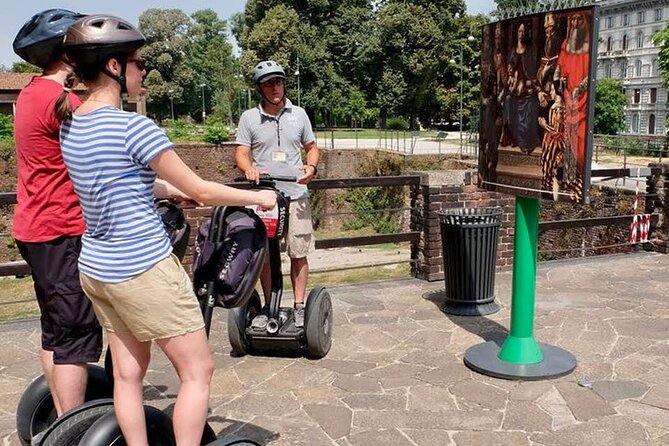
The experience is private, and that matters here. A large group can make city riding slow and awkward. With only your own party participating, you can ask for more explanation at a favorite stop, request a photo, or spend less time somewhere that does not interest you.
The tour is listed at about $90.12 per person. That is not the cheapest way to see Milan’s center, but the price includes a professional local guide, the vehicle, and a helmet. It is easier to justify if you value orientation and personal attention, especially if you have only a short stay. Group discounts may also affect the final cost.
One point needs sorting out before booking. The experience title identifies an electric bicycle, while the highlights describe a Segway tour. Since riding posture, balance, and clothing needs differ, ask City Guided Tour to confirm exactly what you will use.
More bike tours around Milan:
- Milan: Hidden Gems Guided Bike Tour
★ 4.8 · 1,040 reviews - Milan’s Hidden Gems: Unique Bike Tour (ENG, NL)
★ 5.0 · 970 reviews - Milan: Highlights and Hidden Gems Guided Bike Tour
★ 4.7 · 498 reviews
From Arco della Pace to Sforza Castle
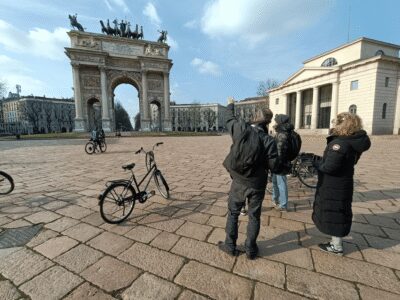
The first stop is Arco della Pace, Milan’s Arch of Peace. You visit the monument close up while the guide explains its background, and you can ask the guide to take a photo with your own camera.
The arch gives the opening portion of the tour a sense of scale. It is not simply another traffic circle or decorative gateway. The monument helps place Milan within its grand civic and architectural tradition, while the surrounding area leads naturally toward Parco Sempione and Sforza Castle.
You get about five minutes here, so expect a quick explanation rather than a long architectural lecture. That short stop is reasonable on a moving city tour, but you should not expect time to study every detail.
Sforza Castle receives about ten minutes from outside. Your guide explains the castle’s role and history, but entry is not included. This is an important distinction: you see the exterior and learn how the site fits into Milan, then return later if you want the museums or interior courtyards.
I like this approach for a first look. You get context without spending the tour indoors, where you would lose the momentum of the route. If the castle is a top priority for you, plan a separate visit and allow much more time.
Sant’Ambrogio and the city’s older religious core
The Basilica di Sant’Ambrogio gives the route a different tone. The church was first founded by Milan’s patron saint at the end of the fourth century, and the guide introduces its Romanesque character during a roughly ten-minute stop.
This is one of the tour’s most useful historical pauses. Milan is often reduced to fashion, shopping, finance, and the Duomo, but Sant’Ambrogio points to a much older religious center. You see a church with deep roots in the city rather than only the monumental architecture most visitors already know.
The visit is an exterior admiration stop, and admission is listed as free. If you want to go inside, the tour does not promise interior access or extra time for it. Still, the church adds a strong historical counterpoint to the grand public spaces later in the route.
The guide’s role is particularly valuable here. A short stop can otherwise blur into a photo break. With an explanation of the church’s origins, you have a reason to notice what you are seeing.
Colonne di San Lorenzo and the Ticinese district
At Colonne di San Lorenzo, the route moves into Ticinese, one of Milan’s more varied areas. The district brings together major basilicas, old buildings, fashion, underground pop culture, and nightlife.
You spend around ten minutes here. That is enough to understand the character of the area and see the famous columns, but not enough to explore its side streets at length. The electric ride helps you sample this part of town without making it a separate half-day walk.
This stop also shows why the route is more interesting than a simple parade of famous monuments. Ticinese has a social and local character that differs from the formal center around the Duomo. You get a glimpse of how historic Milan and modern city life sit close together.
The Basilica of Sant’Eustorgio and the Basilica of San Lorenzo are part of the district’s appeal, though the tour does not list interior visits. If churches are central to your interests, treat this as an introduction and return on foot later.
A few more Milan tours and experiences worth a look
- Milan: ELECTRIC-Bicycle Tour Live Tour Guide 3 hours & half
★ 4.9 · 53 reviews - Milan: SEGWAY Tour with Live Tourist Guide 3 hours & half
★ 4.9 · 53 reviews - Milan: Bicycle Tour Live Tourist Guide 3 hours and half
★ 5.0 · 42 reviews - Private 3 Hours of Wonders in Milan (3km Friendly & Easy)
★ 5.0 · 42 reviews
Darsena and the canals of Navigli
Darsena is the old mercantile port of Milan and part of the Navigli district, known for its system of navigable canals. The route also points out Piazza XXIV Maggio and the neoclassical Porta Ticinese.
This is one of the strongest parts of the ride because the setting changes noticeably from the castle and religious monuments. Water, bridges, old port functions, and the surrounding district give you a different way to understand Milan’s past. The guide explains the connection between Darsena and the canals rather than treating the area as just a pleasant photo stop.
You have about ten minutes here. That will give you a good orientation, but not a full tour of Navigli’s restaurants, bars, and canal-side streets. I would use the guide’s explanation to decide if you want to return in the evening.
The canals are also a practical reason to choose a vehicle tour. Moving between central Milan and Navigli takes time on foot, especially if you are trying to fit in the Duomo and castle on the same day. The electric ride keeps the route moving.
Piazza Affari and Milan’s modern side
Piazza Affari brings you to the Milan Stock Exchange, viewed from outside. The stop also includes an unexpected contemporary art installation facing the exchange.
It is a short five-minute visit, but it breaks up the older monuments with a glimpse of modern Milan. The city is not only churches, royal fortresses, and grand arcades. It is also a major financial center, and this square makes that point quickly.
Do not expect a detailed art visit or time inside the exchange. The value lies in the contrast. After Sant’Ambrogio, San Lorenzo, and Darsena, the financial district shows how many different periods and identities occupy the same city.
Piazza Mercanti and the medieval center
Piazza Mercanti is another brief stop, with about five minutes to see the Broletto, Loggia, and other monuments from outside. The guide explains the square’s history and points out the buildings around it.
This is the kind of place you could easily miss if you only follow the main shopping streets. It sits close to the Duomo but feels more enclosed and historically focused. The short stop gives you a useful pause before the grand reveal of Piazza del Duomo.
Because the visit is exterior only, listen closely to the guide’s explanation. The square’s importance comes from how its buildings relate to Milan’s civic life, not just from a single dramatic viewpoint.
Piazza del Duomo and Galleria Vittorio Emanuele II
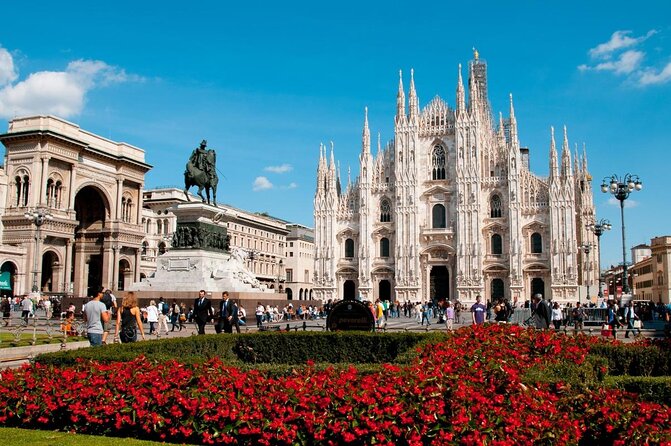
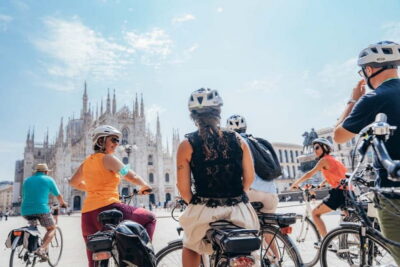
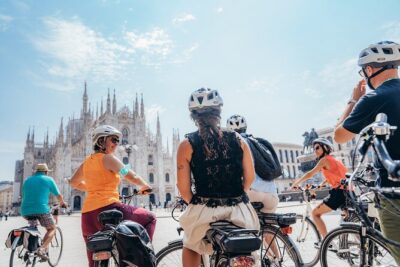
Piazza del Duomo is the tour’s biggest visual moment. You spend about ten minutes admiring the cathedral and learning about the important monuments around the square. The guide can take your photo with your own camera if you ask.
The Duomo is one of those places where an outside explanation helps you notice more. You can look at the architecture on your own, but a guide gives the square a clearer place in the story of Milan.
Admission to the cathedral is not included. The tour does not promise time to climb the roof, enter the church, or visit the museum. If those are on your must-see list, book them separately and do not assume this ride replaces that visit.
Next comes the Galleria Vittorio Emanuele II, one of Milan’s best-known covered arcades. You admire it from outside and hear about its history during a five-minute stop. The route does not include shopping, dining, or a long interior visit, so you can return later if you want to inspect the details at a slower pace.
The pairing works well. The Duomo represents Milan’s grand religious center, while the Galleria adds commerce, design, and public spectacle. Both are close together, but they offer very different impressions.
La Scala and the final return
The final stop is Piazza della Scala, where you see Palazzo Marino and Teatro alla Scala from outside. The opera house is one of Milan’s key cultural landmarks, but admission is not included.
Five minutes is enough for an introduction and a few photographs. It is not enough for a performance, museum visit, or guided interior tour. That makes this a useful final marker rather than a full theater experience.
From here, the tour returns to the original meeting point. The route’s wide coverage means you finish with a working map of Milan: the castle and park to the northwest, the older churches toward the center, the canals to the south, and the Duomo and La Scala at the heart of it all.
How much riding and walking should you expect?
The stated duration is approximately three hours and thirty minutes. The scheduled stops add up to about seventy-five minutes, which leaves roughly two hours and fifteen minutes for riding, transitions, and explanations along the route.
That estimate is useful because this is not a short photo circuit. You need moderate physical fitness, and you should be comfortable spending a substantial part of the outing on the vehicle. A helmet is provided.
The description says the tour is near public transportation, but hotel pickup and drop-off are not included. You must reach Via Lecco, 18, on your own, and the activity ends there as well.
The tour is offered in English, though the guide may be multilingual. If detailed explanations are important to you, confirm the language arrangement when booking.
Who gets the best value from this tour?
I would choose this tour for a first visit, a short stay, or a day when you want to understand Milan’s layout before exploring on foot. It also suits private groups who prefer to ask questions freely instead of staying with a large public group.
It is a good match if you want famous sights plus districts that are easy to overlook. The route includes the major icons, but it also makes time for Ticinese, Darsena, Piazza Affari, and Piazza Mercanti.
You may want another option if your priority is entering monuments. The castle, Duomo, Galleria, and La Scala are mainly outside stops, and several have admission exclusions. This is a sightseeing and orientation ride, not an interior museum tour.
The tour also requires reasonable comfort with riding and city movement. If you dislike bicycles or Segways, or if you need a slower walking pace, verify the vehicle and physical demands first.
Booking, weather, and cancellation details
Confirmation is received at booking, and the experience is often reserved well ahead, with an average booking time of about 64 days. That suggests planning early if your Milan dates are fixed.
You can cancel for a full refund up to 24 hours before the local start time. Changes made within 24 hours are not accepted, and late cancellations are not refunded.
Good weather is required. If poor conditions cancel the experience, you are offered another date or a full refund. Since this is an outdoor ride, that policy is sensible, but keep some flexibility in your schedule if possible.
Should you book the Milan electric bicycle tour?
Book it if you want a private, well-paced introduction to Milan that connects the Duomo, castle, older churches, canals, financial district, and La Scala in one outing. The strongest feature is the route itself: you see the city’s famous face and several areas that give it more personality.
The price makes the most sense for a private group that values a guide’s explanations and the ability to cover distance without tiring out on foot. I would not book it as a substitute for visiting the Duomo roof, Sforza Castle museums, or La Scala’s interior.
Before booking, confirm the electric bicycle versus Segway wording, the guide’s language, and the exact meeting details. Once those points are clear, this is a practical first-day tour for getting your bearings and choosing where to spend the rest of your Milan visit.
FAQ
How long does the Milan tour last?
The tour lasts approximately 3 hours and 30 minutes.
Where does the tour begin and end?
It begins at Via Lecco, 18, 20124 Milano MI, Italy, and ends back at the same meeting point.
Is this a private tour?
Yes. Only your group participates in the activity.
What sights are included?
The route includes Arco della Pace, Sforza Castle, Basilica di Sant’Ambrogio, Colonne di San Lorenzo, Darsena, Piazza Affari, Piazza Mercanti, Piazza del Duomo, Galleria Vittorio Emanuele II, and Piazza della Scala.
Are admission tickets included?
The tour includes exterior sightseeing and guide explanations. Admission to Sforza Castle, the Duomo, and Teatro alla Scala is not included.
What happens if the weather is poor?
The experience requires good weather. If it is canceled because of poor conditions, you can choose another date or receive a full refund.
Just added around Milan
- Visit of Verona and Lake Garda. Full day tour from Milan★ 4.6 · 5 reviews
- From Milan: Villa del Balbianello and Varenna by Train★ 4.2 · 27 reviews
- Explore History and Style with this Walking Tour in Milano★ 5.0 · 15 reviews
- Trekking in the Wood with picnic on the turtles lake★ 5.0 · 9 reviews
- Trekking in the Wood with picnic on the turtles lake★ 5.0 · 8 reviews
- LINATE – MILANO airport transfer★ 4.5 · 14 reviews
- Hot air balloon flight Milan Monday-Friday★ 5.0 · 18 reviews
- Lake Como trekking private guided tour, from Milan★ 5.0 · 9 reviews
Milan Bike Tours, compared.

Milan’s Hidden Gems: Unique Bike Tour (ENG, NL)
Read our review →

Browse the lists this tour appears in