Reviewed · GUIDED
Milan Skyscrapers Guided Tour: Porta Nuova, Unicredit tower & Vertical Forest
Milan’s modern face comes into focus on this private walk through Porta Nuova, Gae Aulenti Square, and Isola. You’ll see the Unicredit Tower, the famous Vertical Forest towers, and the older courtyard homes that give Isola its own character. The tour also explains how the 2015 World Expo helped reshape this part of town.
I like the personal format, since your group gets its own professional art historian guide rather than joining a large crowd. I also like the contrast between new skyscrapers and Isola’s older railing houses. The main drawback is the price, $265.09 per person, which is a serious cost for a three-hour walk, especially since hotel transfers are not included and the food at Eataly may cost extra.
Key points at a glance
- Porta Nuova after the 2015 World Expo: See how a major renewal project changed Milan’s northern center.
- Gae Aulenti Square and Unicredit Tower: Walk to one of Milan’s most dramatic modern urban spaces.
- Isola’s Vertical Forest: Learn how trees and plants are used to add biodiversity to high-rise living.
- Old and new in one walk: Compare Isola’s shared galleries and courtyards with sleek towers nearby.
- Private art historian guide: Your own guide can shape the explanation around your group’s interests.
- Eataly finish: End at a major Italian food hall with regional products from Valle d’Aosta to Sicily.
Why Milan’s modern side deserves a morning or afternoon
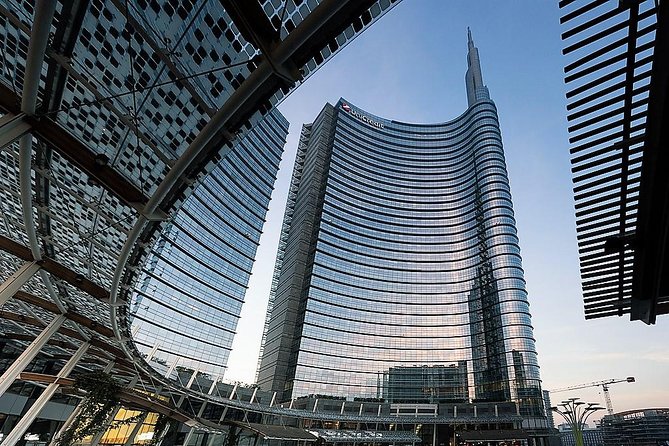
Many first-time visits to Milan focus on the Duomo, La Scala, and the grand shopping arcades. Those sights matter, but this tour shows a different city: one shaped by new housing, offices, public squares, planted towers, and ambitious urban planning.
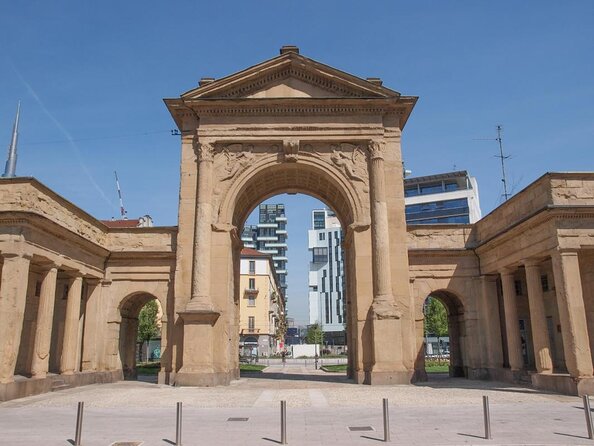
The 2015 World Expo helped push Milan into a large renewal project. The result is especially clear in Porta Nuova, where architects and developers rebuilt a broad section of the city. You’ll see how public spaces, high-rises, restaurants, shops, and planted areas fit together.
I like this subject because it gives you more than a collection of modern buildings. Your guide can explain why the buildings were created, how the area changed, and how Milan tried to make dense city living more environmentally responsible.
The experience lasts about three hours and is private, so only your group takes part. That matters here. Architecture tours can become dry when they turn into a list of dates and building names. A private format gives you room to ask why a tower looks the way it does, how the plants are maintained, or what happened to the older neighborhood nearby.
The tour requires a moderate level of physical fitness. You’ll be walking through several districts, and the experience does not include hotel pickup or drop-off. Start at Eataly Milano Smeraldo on Piazza XXV Aprile, then return to the same meeting point at the end.
A few more Milan tours and experiences worth a look
- Milan: City Sightseeing Hop-On Hop-Off Bus with Audio Guide
★ 4.0 · 6,256 reviews - Milan: Guided Walking Tour & Last Supper Visit with Ticket
★ 4.7 · 5,409 reviews - Milan: Fast-Track Milan Cathedral and Terraces Guided Tour
★ 4.7 · 5,240 reviews
Starting at Eataly Milano Smeraldo
The meeting point is Eataly Milano Smeraldo, a large Italian food destination at Piazza XXV Aprile, 10. It is near public transportation, making it a practical place to begin if you are staying elsewhere in central Milan.
Starting here also gives the tour a useful food connection. Eataly carries regional products from across Italy, from Valle d’Aosta to Sicily. The walk ends back at this location, so you can browse, eat, or buy something after the guide has finished.
The supplied information describes regional tastings as part of the finish, but food and drinks are not listed among the included features. I would treat any purchase or tasting as something to budget for separately unless your booking confirmation says otherwise.
The meeting point is easy to remember, but you should allow enough time to arrive. Since hotel transfers are not provided, you are responsible for reaching Eataly before the start.
Corso Como and the route into Porta Nuova
Your guide leads you along Corso Como, one of Milan’s best-known evening streets. The walk then moves toward the newer Porta Nuova district and Gae Aulenti Square.
This part of the route is useful because it lets you watch the city change block by block. Corso Como has an established Milan identity, while Porta Nuova presents a newer vision of the city with large open spaces and modern buildings.
I would pay attention to the transitions rather than rushing toward the tallest tower. The point is not simply to collect photographs. Your guide is there to show how Milan connects older streets and newer development, and why this part of the city looks so unlike the traditional center.
Because the tour is private, you can ask for more detail about design, city planning, or the effect of the Expo project. If you have a special interest in architecture, tell the guide early. The tour includes a professional art historian guide, so the explanations should go beyond basic directions and building names.
Gae Aulenti Square and Unicredit Tower
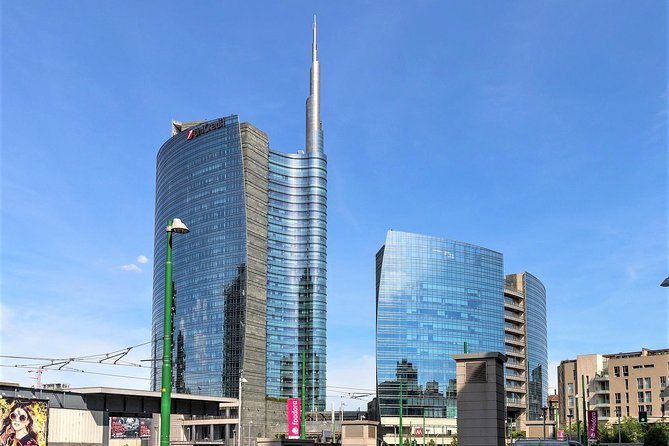
Gae Aulenti Square is the visual centerpiece of the modern section. The square is raised above street level and framed by contemporary buildings, with the Unicredit Tower as its main landmark.
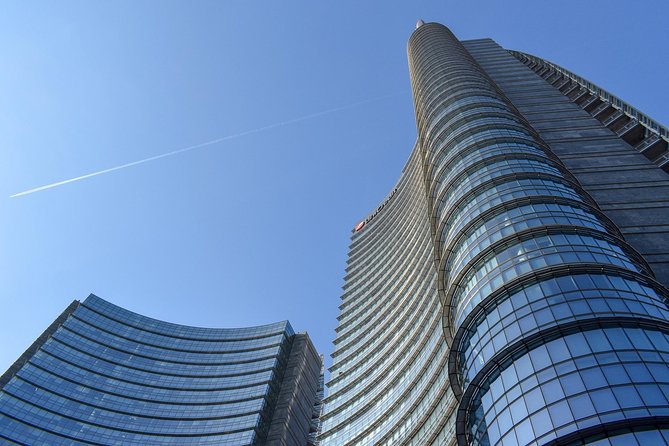
The tour identifies Unicredit Tower as the tallest in Europe. Its height gives the square a strong vertical focus, and it is the kind of place where the scale of Milan’s redevelopment becomes clear. You can look up at the tower, then back across the surrounding public space to see how the buildings shape pedestrian movement.
The itinerary also refers to scenic terraces in the Porta Nuova area. The walk is designed to show you the city from modern public viewpoints, but it does not promise entry to a particular rooftop or observation deck. Do not assume that an interior visit or a climb to a tower is included.
That distinction matters when you compare this tour with a ticketed observation experience. Here, the value comes from the guide’s explanation and the route through the district, not from guaranteed access to the top of a skyscraper.
I like Gae Aulenti Square as a tour stop because it gives the guide something concrete to discuss. You can see the relationship between the tower, the square, and the surrounding development instead of studying architecture from a distance.
A different sort of day out of Milan entirely:
- Milan: Cathedral and Duomo’s Terraces Entrance Ticket
★ 4.6 · 61,054 reviews - Milan Cathedral: Duomo Terraces Ticket (No Church Access)
★ 4.6 · 6,111 reviews - Milan: Milan Cathedral Direct Entrance – Terrace Excluded
★ 4.5 · 5,782 reviews - Milan: Navigli Canal Boat Cruise
★ 3.3 · 4,502 reviews
Isola and the Vertical Forest towers
From the polished new district, the route continues into Isola, an older neighborhood with a more intimate feel. Isola is known here for its railing houses, shared galleries, and courtyards.
These details are important. They show that Milan’s newer towers were not built in an empty field. Modern construction meets an existing neighborhood with its own housing patterns and communal spaces. Seeing both areas on one walk gives you a better sense of the city’s changes than visiting a single new building would.
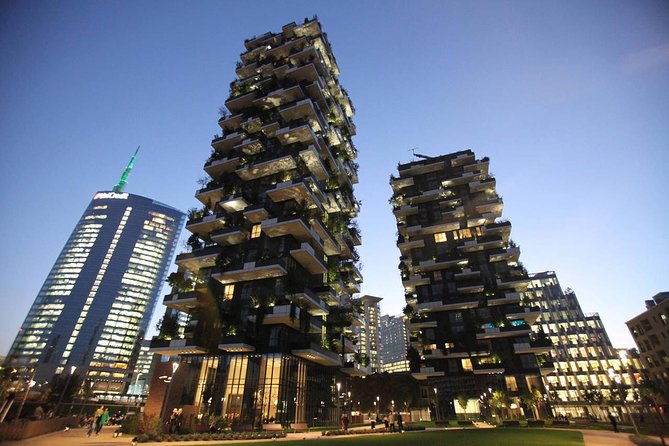
The main attraction is the Vertical Forest, two residential towers covered with trees and plants. The project is presented as a model of urban reforestation and biodiversity, designed to improve the environment without spreading the city farther into open land.
The figures are striking: about 900 trees and more than 20,000 plants grow on the towers. The project received an award in 2016 as the world’s most beautiful urban project. Your guide can put those figures into context and explain why the buildings became such an important example of plant-filled urban design.
You should keep your expectations realistic. This is a guided exterior walk, not a visit inside a private apartment or a botanical tour. You will see the towers and learn about their purpose, but access to the residential buildings is not included in the stated features.
The Vertical Forest is also the tour’s strongest photo stop. Still, the best reason to visit is the contrast between appearance and function. The greenery is not just decoration. It is part of a plan to bring trees and plant life into a dense city.
What the architecture story adds
A guide can turn this route into either a useful city lesson or a long string of facts. The private format gives you a better chance of getting the first kind.
The tour covers architecture, design, urban renewal, and environmental planning. Those subjects overlap in Milan’s modern districts. A building such as the Vertical Forest raises practical questions about how cities can add nature without using more land. The Porta Nuova project raises another question: how do you build a new center while keeping older neighborhoods close by?
That is where an art historian guide can add value. You are not only looking at glass, steel, balconies, and plants. You are learning how the city presents itself after a major international event.
One guide named in the available comments is Valerio. He led a walk during a very hot July afternoon, and the experience matched high expectations about Milan’s new district. Since guide assignments can change, you should not assume Valerio will lead your tour, but his name gives you an idea of the personal nature of the service.
The heat point is practical. This is an outdoor walk, and a July afternoon can be demanding. Bring water, wear comfortable shoes, and consider choosing a cooler time if your schedule allows. The tour duration is only about three hours, but walking in summer sun can make it feel longer.
Finishing with Italian food at Eataly
The route ends where it begins, at Eataly Milano Smeraldo. That is convenient and gives the tour a natural final chapter.
Eataly is an established Italian food brand with products and regional specialties from across the country. You can use the ending to compare food traditions from northern and southern Italy, pick up gifts, or have something to eat after the walk.
The food stop also balances the architecture. After discussing towers, public spaces, and urban design, you finish with a very tangible part of Italian culture. The regional range is broad, from Valle d’Aosta to Sicily.
Do not confuse the Eataly stop with a full food tour. The experience is built around architecture, and the included features list only a professional art historian guide and a private tour. Sampling or buying food may require extra payment.
Still, the location is a smart end point. You are not dropped in an unfamiliar neighborhood with no clear next step. You can continue exploring Eataly or use nearby public transportation to reach another part of Milan.
Is $265.09 per person fair?
At $265.09 per person, this is not a budget sightseeing walk. The price makes the most sense for people who value a private guide and want architecture explained in detail.
If two or more people share the experience, group discounts may improve the cost. The private arrangement also means you are paying for a more personal pace, rather than simply buying entry to a landmark.
I would compare this price with what you want from your Milan sightseeing. If you mainly want photographs of the Vertical Forest and Unicredit Tower, you can likely see the exterior areas without paying for a private tour. The cost is harder to justify for a quick look.
If you want context, questions answered, and a clear three-hour route linking several connected districts, the price has a stronger case. You are paying for the guide’s time and the explanation of Milan’s renewal, not just access to a building.
The perfect audience is a small group with a real interest in architecture, design, or city planning. It can also suit repeat visitors who have already seen the Duomo and want a different side of Milan. For families, the private format may help, but the walking requirement and price are worth considering.
Practical details before you book
Confirmation is provided at the time of booking, and a mobile ticket is available. The tour is near public transportation, but hotel pickup and drop-off are not included.
Plan on moderate physical activity. You will walk through Porta Nuova, Corso Como, Gae Aulenti Square, and Isola, then return to Eataly. Comfortable shoes are a sensible choice, especially during a hot summer afternoon.
The tour is private, so only your group participates. That is useful if you want to pause for photographs or ask detailed questions without slowing down a larger party.
Free cancellation is available if you cancel at least 24 hours before the local start time. Changes or cancellations made inside that window are not refunded, so check the local time carefully when making plans.
Should you book the Porta Nuova tour?
Book it if you want Milan explained through its newest buildings, public spaces, and environmental projects. The combination of Gae Aulenti Square, Unicredit Tower, Isola, and the Vertical Forest gives you a clear look at how the city changed after the 2015 Expo.
I especially recommend it for architecture fans and small private groups who prefer a conversation with a guide over a fixed large-group route. The contrast between Isola’s older courtyards and the new towers is the strongest reason to choose this experience.
Skip it if your main goal is a cheap photo walk or guaranteed access to a rooftop. The price is high, food is not clearly included, and the tour does not promise entry into the skyscrapers. For the right visitor, though, this is a thoughtful way to see Milan’s modern side and understand why the skyline looks so different today.
FAQ
How long does the Milan Skyscrapers Guided Tour last?
The tour lasts approximately three hours.
Where does the tour begin?
It begins at Eataly Milano Smeraldo, Piazza XXV Aprile, 10, 20121 Milan, Italy.
Where does the tour end?
The activity ends back at the Eataly Milano Smeraldo meeting point.
Is the tour private?
Yes. Only your group participates, and a professional art historian guide leads the experience.
Is hotel pickup included?
No. Hotel pickup and drop-off are not included.
What places does the tour visit?
The route includes Porta Nuova, Corso Como, Gae Aulenti Square, the Unicredit Tower area, Isola, the Vertical Forest towers, and Eataly.
What is the cancellation policy?
You can cancel for a full refund up to 24 hours before the experience starts. Cancellations or changes made less than 24 hours before the start time are not refunded.
Just added around Milan
- Visit of Verona and Lake Garda. Full day tour from Milan★ 4.6 · 5 reviews
- From Milan: Villa del Balbianello and Varenna by Train★ 4.2 · 27 reviews
- Explore History and Style with this Walking Tour in Milano★ 5.0 · 15 reviews
- Trekking in the Wood with picnic on the turtles lake★ 5.0 · 9 reviews
- Hot air balloon flight Milan Monday-Friday★ 5.0 · 18 reviews
- Trekking in the Wood with picnic on the turtles lake★ 5.0 · 8 reviews
- LINATE – MILANO airport transfer★ 4.5 · 14 reviews
- Lake Como trekking private guided tour, from Milan★ 5.0 · 9 reviews
Guided, compared.
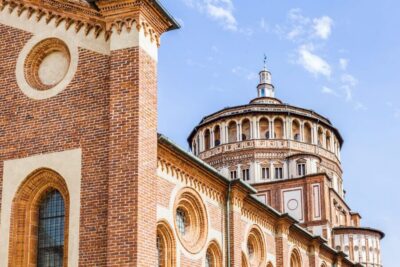
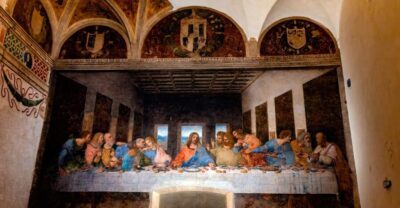
Guided Walking Tour & Last Supper Visit with Ticket
Read our review →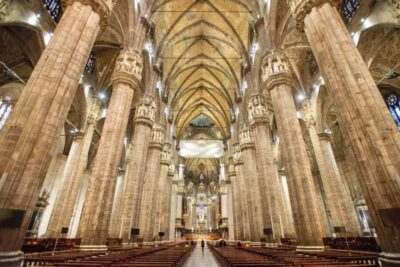
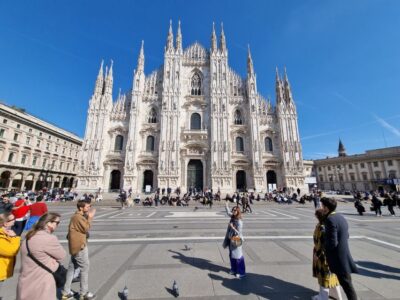
Fast-Track Milan Cathedral and Terraces Guided Tour
Read our review →
Duomo Rooftop and Cathedral Guided Tour with Tickets
Read our review →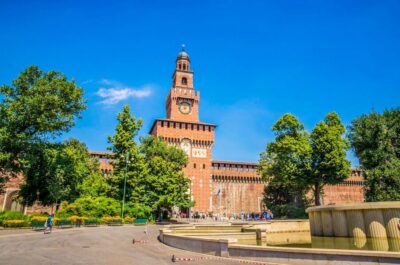
Sforza Castle Entry Ticket with Digital Audio Guide
Read our review →