
Reviewed · MILAN WALKING TOURS
Milan by night walking experience
Milan changes after sunset. The stone of Sforza Castle, the lights around La Scala, and the Duomo’s bright facade give this two-hour walk a calmer, more dramatic feel than a daytime circuit. I like the simple route from castle to cathedral, and I like that guides such as Giorgio and Nina have been praised for bringing real enthusiasm and strong historical knowledge.
I also like the timing. A 6:30 pm start works well after an afternoon arrival or a long train ride, and the walk gives you a useful map of central Milan before you explore on your own. The main caution is sound: with fewer than 10 participants, headphones may not be supplied, and one softly spoken guide was hard for some people to hear.
Key things to know before booking
- Castle-to-cathedral route: The walk begins at Filarete Tower beside Sforza Castle and ends at Piazza del Duomo.
- Three major Milan sights: You pass Sforza Castle, La Scala opera house, and the Duomo, with history and architecture along the way.
- Two-hour evening format: The length is manageable after a flight or busy sightseeing day.
- Small group setting: The maximum is 20 people, though smaller groups are possible.
- Headphones depend on group size: Audio equipment is included from 10 participants onward, not necessarily for very small groups.
- Good first-night orientation: The route helps you find your way around central Milan before returning to the sights independently.
A two-hour introduction to Milan after dark
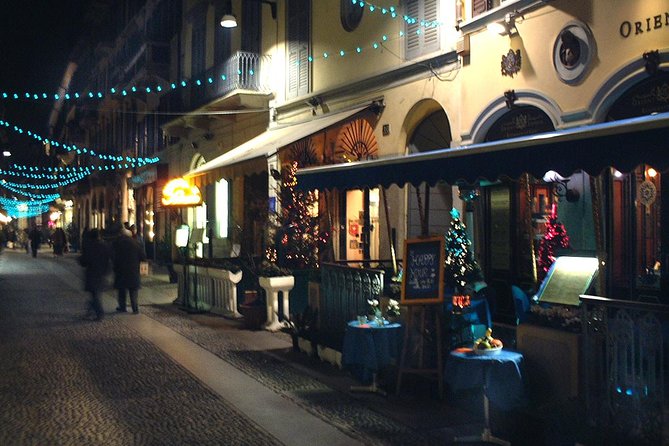
This is a walking orientation, not an evening museum visit. You should expect to see the major buildings from the outside while your guide explains their place in Milan’s story, architecture, and daily life.
The route starts at 6:30 pm at Filarete Tower in Piazza Castello and finishes at Piazza del Duomo. That point-to-point design is useful. You are not simply circling one square and returning to where you began. Instead, you cross a central part of Milan and finish beside the city’s most famous landmark.
I like this format for a first evening in town. You get a basic mental map of the center, then you can return to the Duomo, La Scala, or nearby streets on your own the next day. Several guides have been praised for answering questions and offering practical local orientation, with Giorgio receiving especially warm attention for his work in architectural history and his ability to guide in English, Italian, and German.
The experience is listed at $52.86 per person. That is fair if your guide gives you more than dates and building names, particularly if you value a live explanation and a small group. It is less convincing if you want interior visits, extensive art commentary, or a long stop at each landmark. Food, drinks, tips, and optional hotel transfers cost extra or are not included.
More walking tours in Milan:
- Milan: Guided Walking Tour & Last Supper Visit with Ticket
★ 4.7 · 5,409 reviews - Milan: Guided Walking Tour with Last Supper Skip-the-Line
★ 4.7 · 1,143 reviews - Milan: Guided Street Food Walking Tour with Food Tasting
★ 4.8 · 654 reviews
Sforza Castle gives the walk a strong beginning
Sforza Castle is a large fortified complex built in the 15th century by Francesco Sforza. It has changed over time and was restored by major figures such as Luca Beltrami. The complex also houses important works, including Michelangelo’s Pietà Rondanini.
The evening setting gives the castle a different mood. Its size is easier to appreciate when you are outside the busy daytime flow, and the walls and towers make a memorable first stop. Your guide can place the building in Milan’s political and artistic story before leading you onward.
You should keep your expectations clear. The tour does not include a stated museum entrance or a visit inside to see the Pietà Rondanini. Treat the castle portion as an exterior introduction and a chance to learn why this fortified site matters.
The castle is also where the pace may feel uneven. One person found that too much of the walk was spent around the complex, with the same coat of arms explained more than once. That is a useful warning: the quality of the experience depends heavily on how your guide manages time and adds stories beyond the visible details.
A strong guide can turn the castle into a useful lesson in Milanese power, restoration, and art. A less engaging guide may simply point out walls, signs, and symbols. If you want depth, ask questions early. The guides who made the strongest impression were the ones who welcomed questions and connected architecture with the life of the city.
La Scala adds music and ceremony
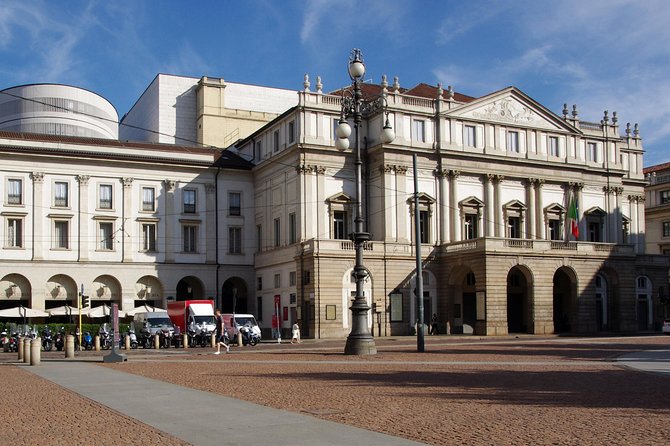
The next major sight is Teatro alla Scala, Milan’s main opera house and one of the world’s best-known theaters. Architect Giuseppe Piermarini designed it, and it opened in 1778.
For many people, La Scala is the most useful stop between the castle and the Duomo. It adds a different side of Milan. Sforza Castle speaks to fortifications and ruling families, while La Scala points to opera, public culture, and the city’s long connection with performance.
Again, this is an exterior stop unless your guide says otherwise. There is no theater admission in the listed inclusions. You will want to see the building as part of the route, not book this walk expecting an opera performance or a full theater tour.
This section can also help you understand Milan as more than a collection of famous facades. A good explanation of Piermarini’s design and the theater’s opening in 1778 gives the building a clear place in the city’s story. If you are interested in architecture, ask your guide to compare the theater with the castle and cathedral. The contrast makes the route more interesting.
The walk through the central streets is part of the experience. You may pass museums, shops, and streets lined with businesses. One weak experience was criticized for offering basic statements about buildings and commercial streets rather than personal stories or unusual details. That is the main difference between a merely functional orientation and a memorable one.
The Duomo is the evening finale

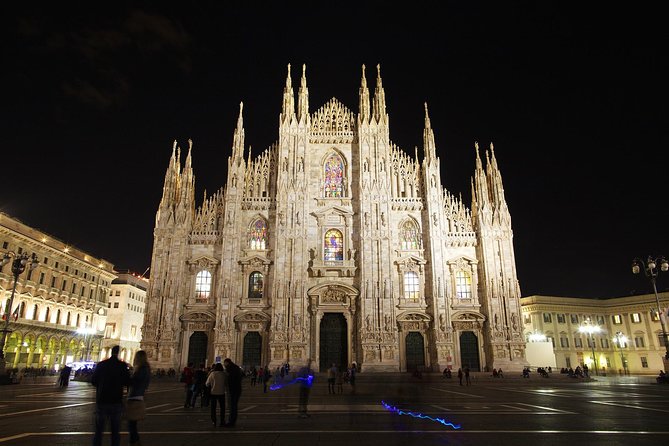
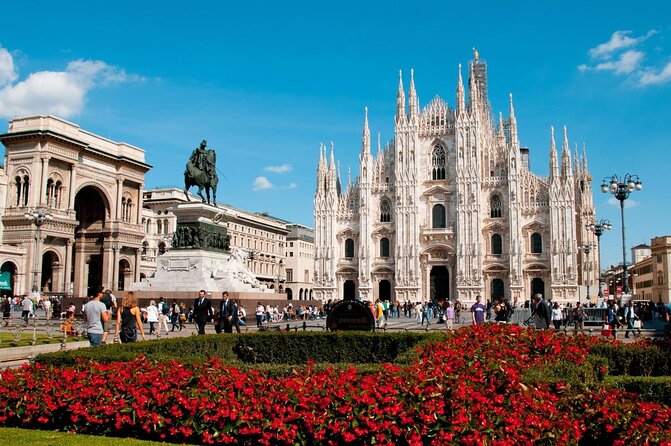
The walk ends in Piazza del Duomo, beside Milan’s cathedral. Its full name is the Metropolitan Cathedral of the Nativity of the Blessed Virgin Mary, and it is among Italy’s largest churches. For most people, this is the visual high point of the evening.
The Duomo after dark can feel especially striking. Its pale exterior catches the light, and the open square gives you room to take in the scale of the facade. You do not need a long lecture to understand why this is Milan’s symbol, but a good guide can explain details that you might otherwise miss.
The tour does not include entrance to the cathedral or its rooftop. If you want to go inside or visit the terraces, plan that separately for another time. The walk is best used as an introduction, then you can decide if the Duomo deserves a longer visit the next day.
The ending is practical as well as scenic. From Piazza del Duomo, you are in a central part of Milan with access to public transportation. You can continue your evening, return to your hotel, or use the location as a starting point for independent sightseeing.
A different sort of day out of Milan entirely:
- Milan: Cathedral and Duomo’s Terraces Entrance Ticket
★ 4.6 · 61,054 reviews - Milan: City Sightseeing Hop-On Hop-Off Bus with Audio Guide
★ 4.0 · 6,256 reviews - Milan Cathedral: Duomo Terraces Ticket (No Church Access)
★ 4.6 · 6,111 reviews - Milan: Milan Cathedral Direct Entrance – Terrace Excluded
★ 4.5 · 5,782 reviews
Guide quality matters more than the route
The route is straightforward, but the guide makes or breaks it. The strongest experiences came from guides who explained Milan with energy, answered questions, and offered details beyond the wording on a sign.
Giorgio has been praised for his historical and architectural background, his enthusiasm, and his ability to speak several languages. Nina was also singled out for her passion for Milan’s history and for keeping a family group interested. These details matter because the tour covers familiar landmarks. You are paying for interpretation, not simply for someone to lead you between famous buildings.
Other experiences were much less successful. A softly spoken guide was difficult to hear, and a small group did not receive headphones. Another person felt the information stayed at the level of a basic guidebook. Those problems do not mean every departure will be weak, but they show why you should pay attention to the audio arrangement and speak up if you cannot hear.
Headphones are provided from 10 participants. The maximum group size is 20, so a larger departure should be easier to follow when the streets are noisy. In a group of four or fewer, you may be listening directly to the guide. Stand close, face the speaker, and ask for a louder voice if needed. That small step can make a large difference.
Who gets the most from this walk?
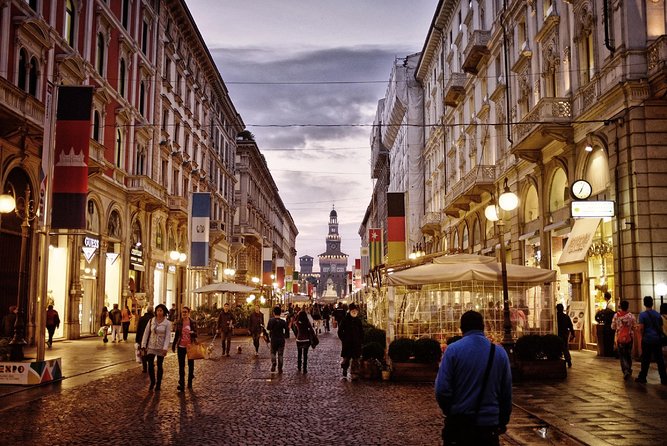
I would choose this tour if you are visiting Milan for the first time and want a short, organized introduction. It suits people who prefer a guide to set the city in context before they explore independently.
It also works well after a long arrival day. A two-hour walk is enough to get outside, see major sights, and learn some basic history without committing to a full-day program. The 6:30 pm start gives you time to check in, eat something beforehand, or reach the meeting point by public transportation.
Families may like the manageable length, though younger children may find the historical explanations slow if the guide is not lively. The experience can also suit couples and solo visitors who want company on their first evening without joining a large bus group.
You should think twice if you dislike walking or expect frequent indoor visits. The product is plainly a walking experience, and the route includes substantial time on foot. It also does not include meals, drinks, or hotel transportation unless you arrange a paid transfer.
This is not the right choice if you want a specialist art tour focused on the Pietà Rondanini, a guided interior visit to the Duomo, or a detailed tour of La Scala. You will see these major places as parts of a wider city walk.
How the price compares with the experience
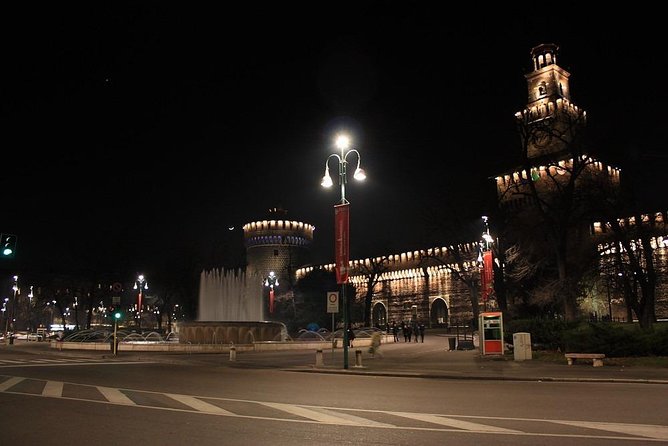
At $52.86, the cost sits in the middle range for a short guided city walk. The value comes from three things: the small group limit, the central route, and the guide’s ability to turn familiar buildings into a coherent story.
I consider it worthwhile when you use the walk as a first look at Milan. It can save you time later because you finish knowing where the castle, opera house, and cathedral sit in relation to one another. You also get the atmosphere of the city after sunset, which a daytime sightseeing circuit cannot quite match.
The value drops if the guide gives only obvious facts. Since the tour lasts about two hours, there is limited time for extended discussion at every stop. You should book it for orientation and atmosphere, not for a full academic treatment of Milan’s art and architecture.
Group discounts may be available, and confirmation is provided when you book. The experience can be canceled free of charge up to 24 hours before the start time. Cancellations made inside that period are not refunded, and a minimum group size is required for the tour to operate.
Practical details that shape the evening
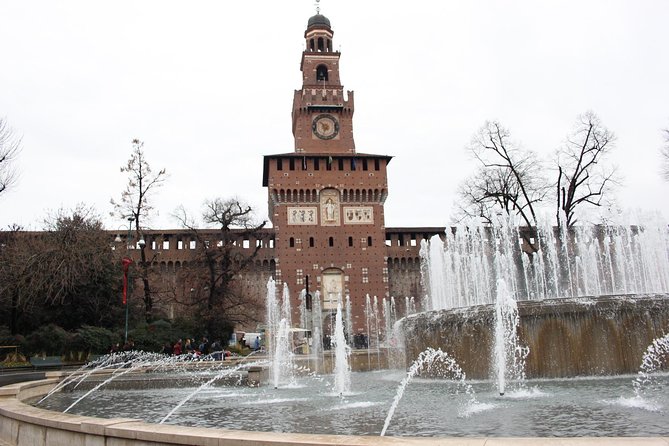
Meet at Filarete Tower, Piazza Castello, 20121 Milan. The walk ends at Piazza del Duomo, 20122 Milan. Check the meeting point carefully because the route is point to point, not a return trip to the castle.
The tour is offered in English and has a maximum of 20 participants. It is near public transportation, and most people can take part. You should still wear comfortable shoes and allow enough time to reach the castle before the 6:30 pm start.
Tips are optional. Food and drinks are not included, so eat before the walk or plan a meal after reaching the Duomo. Hotel pickup and drop-off may be available for an extra charge, but the standard experience begins at the stated meeting point.
The evening can include crowds, especially around central Milan’s best-known sights. If you cannot hear clearly, move closer to the guide and ask for a repeat. With a larger group, headphones should help from the 10-person threshold.
Should you book Milan by night?
Book it if you want a short first-night orientation with Milan’s major central sights in one clean route. The castle-to-cathedral walk is easy to understand, the Duomo makes a strong finale, and guides such as Giorgio and Nina can add real value through clear explanations and local enthusiasm.
Skip it if you want indoor admissions, a specialist art lesson, or a tour with little walking. The experience is only as good as the guide’s delivery, and the lack of headphones in very small groups can be a real problem for anyone with hearing difficulty.
For most first-time visitors, I would treat this as a useful opening chapter rather than the whole Milan story. Use it to get your bearings, note the places you want to revisit, and return to the Duomo or castle with more time the next day.
FAQ
Where does the Milan by night walking experience begin?
It begins at Filarete Tower in Piazza Castello, Milan.
Where does the walk finish?
The tour ends at Piazza del Duomo in central Milan.
What time does the tour start?
The stated start time is 6:30 pm.
How long does the experience last?
The walk lasts approximately two hours.
Which major sights are part of the route?
The route includes Sforza Castle, Teatro alla Scala, and Milan’s Duomo.
Does the price include entry to the castle, La Scala, or the Duomo?
The listed inclusions do not state that entrance tickets are included. The experience is described as a walking tour.
Is the tour offered in English?
Yes. The tour is offered in English.
Are headphones provided?
Headphones are provided from 10 participants. They are not necessarily provided for smaller groups.
How many people can join the tour?
The maximum group size is 20 participants.
Can I cancel for a full refund?
Yes, if you cancel at least 24 hours before the local start time. Cancellations made less than 24 hours before the start are not refunded.
More Evening Experiences in Milan
- Milan: Sunset Navigli Food & Drinks Tour by Do Eat Better
★ 4.5 · 517 reviews - Milan by Night 2-Hour Walking Tour
★ 4.4 · 286 reviews - Milan: Sunset Navigli Food & Drinks Tour with a Local
★ 4.6 · 264 reviews - Sunset Navigli Boat Tour in Milan with Optional Aperitivo
★ 3.0 · 219 reviews
Just added around Milan
- Visit of Verona and Lake Garda. Full day tour from Milan★ 4.6 · 5 reviews
- From Milan: Villa del Balbianello and Varenna by Train★ 4.2 · 27 reviews
- Explore History and Style with this Walking Tour in Milano★ 5.0 · 15 reviews
- Trekking in the Wood with picnic on the turtles lake★ 5.0 · 9 reviews
- Hot air balloon flight Milan Monday-Friday★ 5.0 · 18 reviews
- Trekking in the Wood with picnic on the turtles lake★ 5.0 · 8 reviews
- LINATE – MILANO airport transfer★ 4.5 · 14 reviews
- Lake Como Day Trip from Milan by Train: Private & Personalized★ 5.0 · 11 reviews
Milan Walking Tours, compared.

Guided Walking Tour & Last Supper Visit with Ticket
Read our review →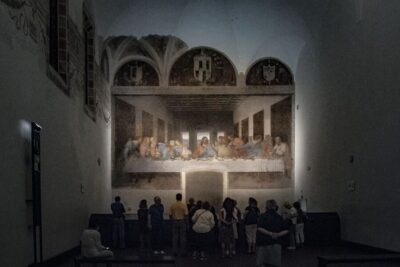
Guided Walking Tour with Last Supper Skip-the-Line
Read our review →
Guided Street Food Walking Tour with Food Tasting
Read our review →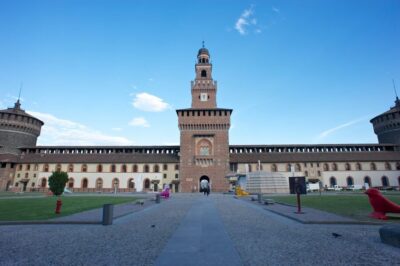
Guided Walking Tour with Duomo and the Last Supper
Read our review →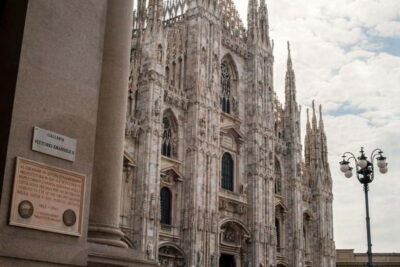
Best of City Walking Tour with Last Supper Tickets
Read our review →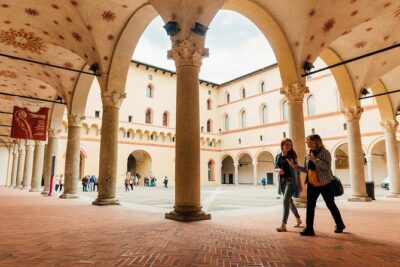
Milan Highlights and Hidden Gems Private Guided Walking Tour
Read our review →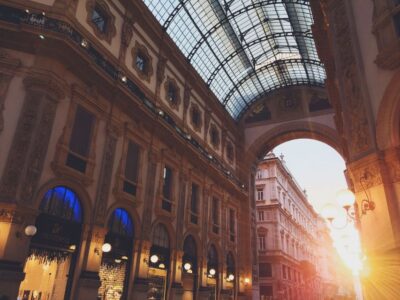
Browse the lists this tour appears in