
Reviewed · SFORZA CASTLE TOURS IN MILAN
Milan: Sforza Castle and Michelangelo’s Pietà Rondanini Tour
Michelangelo’s Pietà Rondanini is the heart of this tour: unfinished, spare, and surprisingly modern. You see the final work of a sculptor who kept reshaping the marble until just days before his death at 89, then follow its story into the courtyards of Sforza Castle.
I like the focused route and the way guides such as Giorgio, Fabio, Lorella, and Simone have connected art with Milanese politics. I also like the small groups, which make it easier to ask questions. The main drawback is time: 90 minutes is enough for the key sights, but not for every museum room.
Key points to know before you book
- Michelangelo’s final sculpture: Study the unfinished Pietà Rondanini and its long, narrow figures, rough marble, and intense emotional force.
- Leonardo’s Milanese workplace: Learn about Leonardo da Vinci’s nearly 20 years at the Sforza court, where he served as an engineer and architect.
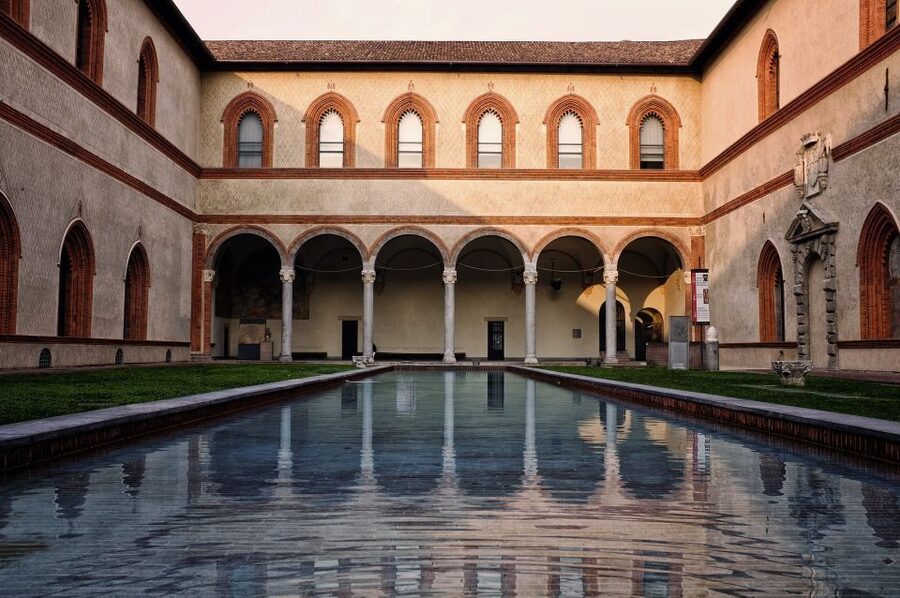
- Two important courtyards: Walk through the Corte Ducale and Cortile della Rocchetta while hearing how the castle changed from fortress to ducal residence.
- Small-group format: Groups can be very small, sometimes only three or four people, though the exact size varies.
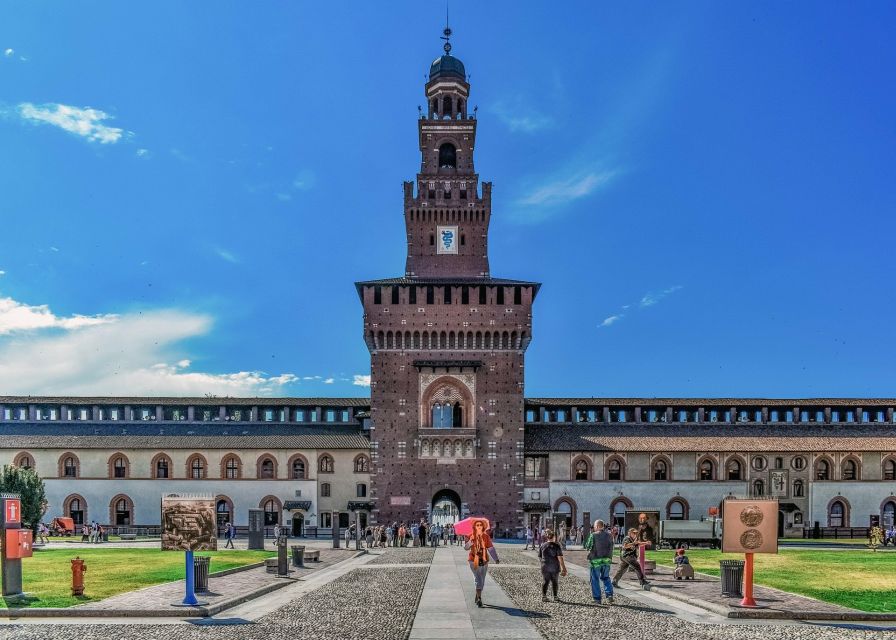
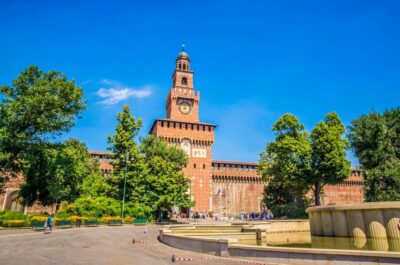
- Clear meeting point: Meet outside the castle in Piazza Castello, under the Filarete clock tower, not inside the courtyards.
- Good short-tour value: At $47 per person, the price pays for museum admission and a guide who gives structure to a large, sometimes confusing complex.
Why Sforza Castle is worth your time in Milan
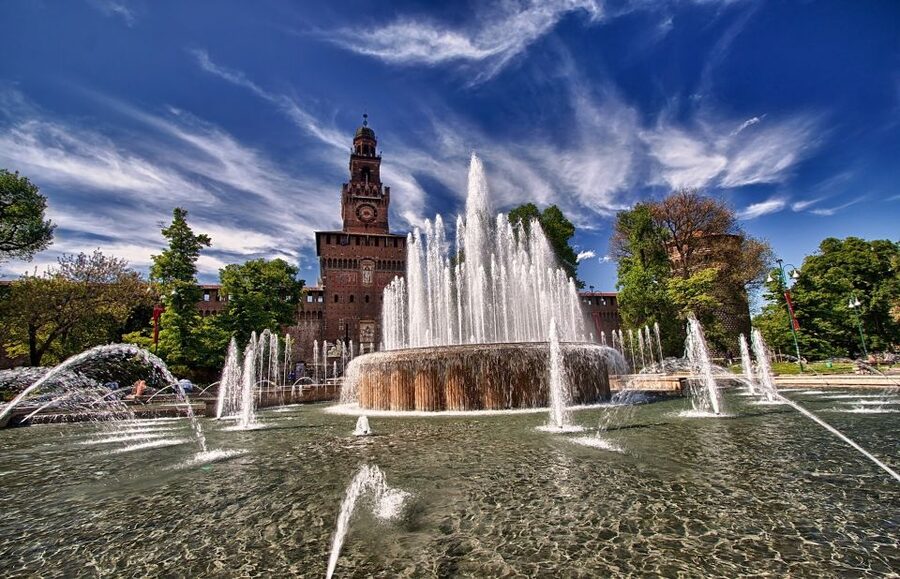
Milan can feel like Italy’s forward-looking city: fashion, finance, design, and fast trains. Sforza Castle gives you the older Milan, where powerful families used stone, art, and ceremony to announce their authority.
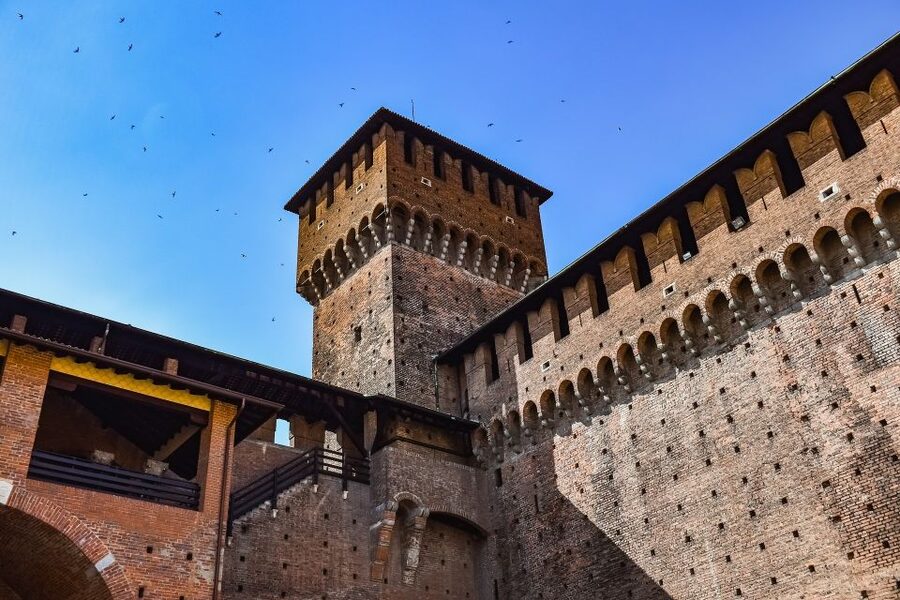
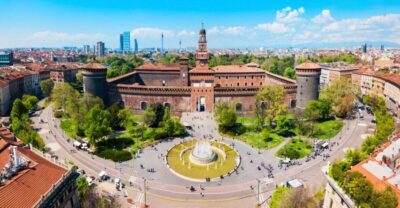
The castle sits close to the Duomo, but its mood is different. The cathedral overwhelms you with Gothic height. Sforza Castle works through heavy walls, broad courtyards, towers, and the memory of rulers who wanted Milan to rival the great courts of Renaissance Italy.
I find the setting useful early in a Milan visit because it explains how the city became a center of art and power. The Visconti and Sforza families were not just names attached to buildings. They shaped Milan’s government, court culture, military strength, and artistic ambitions.
Your guide sets this story in motion before leading you through the castle. That context matters. Without it, the courtyards can look like attractive but empty stone spaces. With it, the arches and towers become pieces of a political story.
More Sforza Castle Tours in Milan
- Milan: Sforza Castle Entry Ticket with Digital Audio Guide
★ 4.0 · 2,675 reviews - Milan: The Last Supper & Sforza Castle Guided Tour
★ 4.6 · 610 reviews - Milan: Last Supper and Sforza Castle Guided Tour
★ 4.6 · 498 reviews
Meeting under the Filarete Tower
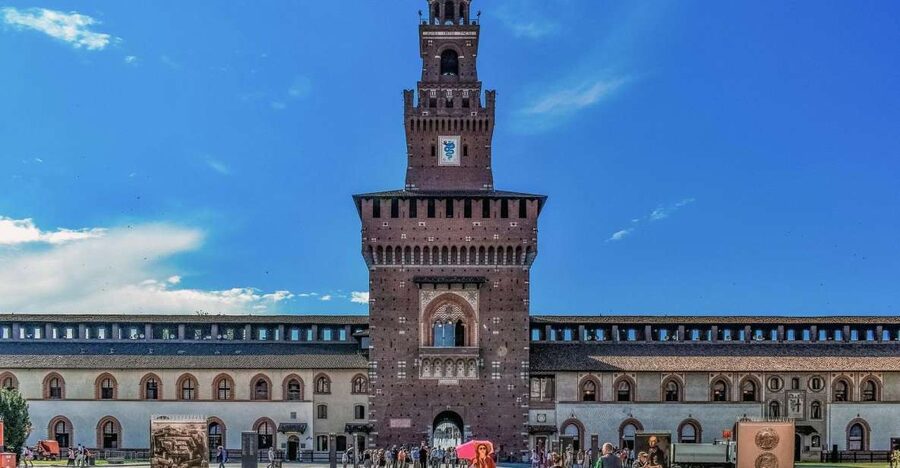
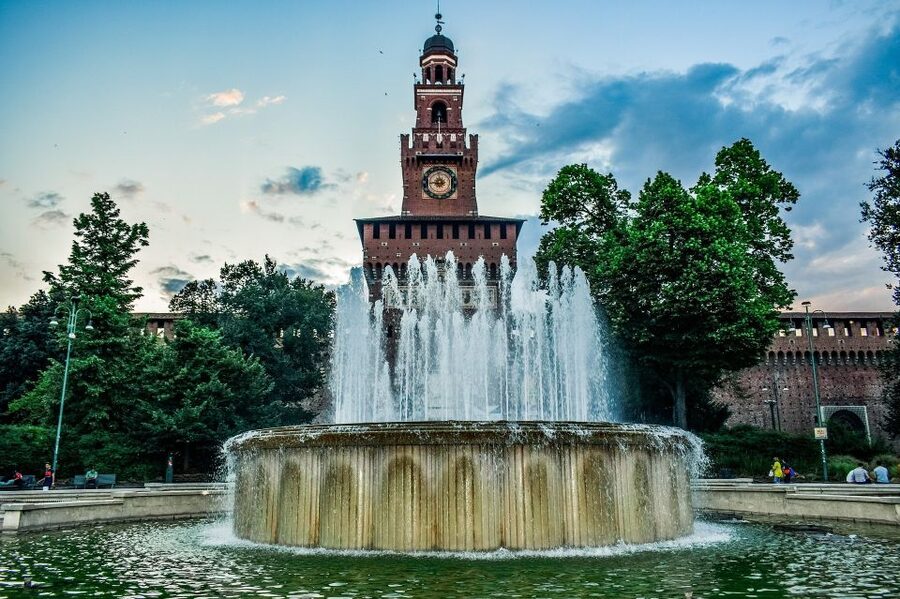
The meeting point is in Piazza Castello, outside Sforza Castle and under the Filarete clock tower. Do not walk into the courtyards looking for the group. Find the guide outside and look for the Hidden Experiences purple flag or board.
This detail is worth taking seriously. One past participant specifically found the meeting instructions confusing, so give yourself time to identify the tower and guide before the starting time. The location is central, but a crowded square and a large castle frontage can make a rushed arrival frustrating.
The Filarete Tower also gives you an immediate sense of scale. It is the castle’s most recognizable entrance feature, and the guide uses it to introduce the building’s long story. You begin with military power before moving toward court life, museums, and sculpture.
The tour lasts about 1.5 hours. That is a useful length if you have a packed Milan schedule, but it also sets a limit. You receive an organized introduction to the major sights rather than a full museum visit.
Michelangelo’s Pietà Rondanini takes center stage
The strongest part of the experience is the visit to Michelangelo’s Pietà Rondanini. This is not the polished, anatomically precise Michelangelo many people expect after seeing the Sistine Chapel or his earlier sculptures.
The work shows Mary supporting the body of Christ, but the forms are stretched and simplified. The surface remains rough in places. Instead of presenting ideal beauty, Michelangelo seems to reduce the sculpture to sorrow, effort, and spiritual urgency.
That unfinished quality is not a minor detail. It changes how you look at the piece. You can see the artist working through the marble rather than hiding the process under a perfect final surface.
Michelangelo returned to this block late in life and continued working on it until only a few days before his death at age 89. Your guide explains how the Pietà differs from the confident, muscular work of his youth and why the later sculpture feels so personal.
I would not rush this room. The Pietà Rondanini rewards quiet looking, and the guide’s explanation helps you notice the relationship between the figures, the awkward balance, and the sections that remain incomplete.
This is also the point where the tour moves beyond a basic art-history lecture. You are not only learning when Michelangelo worked, or who commissioned what. You are considering how an aging artist faced mortality through marble.
The Ducal Courtyard and the world of Ludovico il Moro
After the Pietà, the tour shifts toward the castle’s architecture and political life. The Corte Ducale, or Ducal Courtyard, reflects the castle’s transformation from defensive stronghold into a residence fit for a ruling family.
The change tells you much about Milan’s rulers. A fortress protects power, but a ducal palace displays it. Courtyards gave the court room for movement, ceremony, and daily life, while the surrounding walls still projected military strength.
This is where the story of Ludovico il Moro becomes important. His court helped make Milan a major Renaissance center, and Leonardo da Vinci spent nearly two decades in this environment.
The guide explains that Leonardo was not simply a painter waiting for his next masterpiece. At the Sforza court, he worked as an engineer, architect, and designer as well as an artist. His connection to Milan reaches far beyond The Last Supper.
You will hear about his role within the court and the complicated relationship between Leonardo and the Sforza family. The value here is the correction of a familiar idea. Leonardo’s Milan was a working court, not just a backdrop for famous paintings.
The courtyard itself may not reveal an obvious Leonardo invention. What the guide supplies is the setting and the human story: a brilliant, versatile artist serving rulers who wanted practical expertise and magnificent cultural projects.
More museums and galleries in Milan:
- Milan: Leonardo3 The World of Leonardo Museum Entry Ticket
★ 4.4 · 3,241 reviews - Milan: La Scala Theater & Museum Guided Experience
★ 4.1 · 2,931 reviews - Milan: “Museo Teatrale Alla Scala” Guided Tour
★ 4.6 · 2,513 reviews - Milan: La Scala Theater and Museum Tour with Entry Tickets
★ 4.7 · 1,722 reviews
The Cortile della Rocchetta and castle life
The Cortile della Rocchetta brings a different side of the complex into view. Its enclosed character reminds you that Sforza Castle had several jobs at once. It defended the city, housed the court, and provided space for servants, soldiers, officials, and artists.
The guide uses these spaces to explain the daily life and rivalries of Milan’s ruling families. You hear about the Visconti and Sforza dynasties, their ambitions, and the noblewomen and powerful men who helped shape court culture.
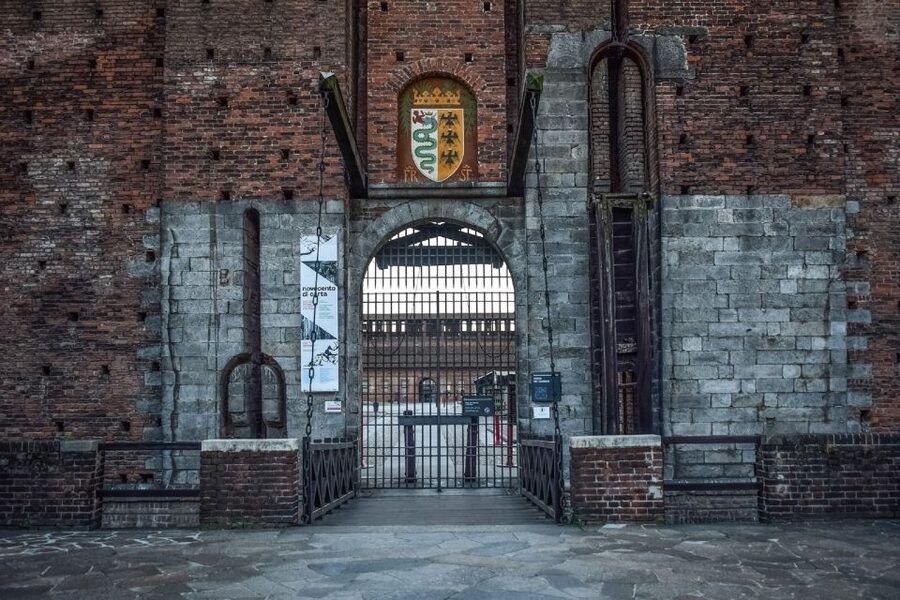
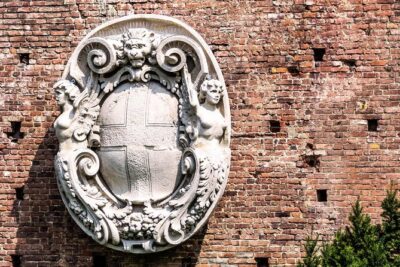
One memorable symbol is the Biscione, the serpent associated with Milan and the Visconti family. Learning to recognize it adds something to the rest of your time in Milan because the emblem appears in the city’s visual identity.
This part of the tour works best when you enjoy stories tied to places. The castle walls do not tell you on their own which family controlled Milan or how a court operated. A good guide turns the architecture into a sequence of decisions, alliances, and power struggles.
The castle also survived major changes over the centuries. Your guide explains how it moved from a symbol of ducal control and military force toward its modern role as a public cultural site.
What you see in the museums
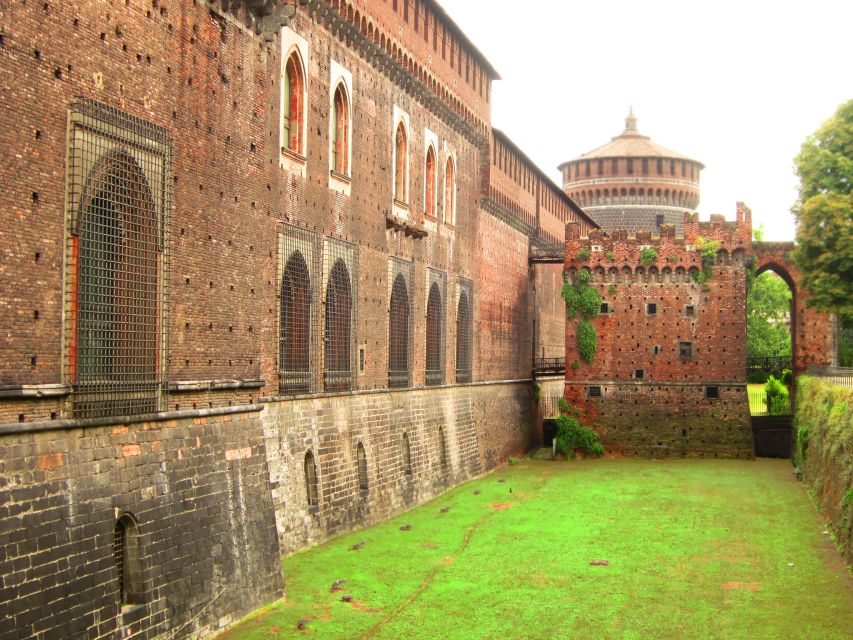
Admission covers the castle and its museums. The exact emphasis can vary, but the tour is built around the Pietà Rondanini and selected parts of the larger complex.
That selection is helpful if you are visiting for the first time. Sforza Castle contains more material than you can sensibly understand in a short visit, and a guide can point you toward the pieces that best explain Milan’s artistic and political story.
The archaeological museum may receive only a quick visit. One participant felt that the pace through that section was rushed, and this is a fair limitation to keep in mind. If ancient history is your main interest, you may want more independent time after the guided portion.
The same applies to temporary displays and other museum rooms. A 90-minute tour cannot give equal attention to every collection. The benefit is focus; the cost is selectivity.
Some people have found extra exhibitions open during their visit, but those displays are not the main promise of this experience. Think of the museum access as a well-chosen introduction rather than a complete day of gallery viewing.
The guide makes the difference
This experience depends heavily on the person leading it. The strongest part of the format is the chance to hear difficult history and art explained in plain language while you are standing in the actual rooms and courtyards.
Guides named in past bookings include Giorgio, Fabio, Lorella, Simone, Stefania, Simon, Nina, Chiara, Sylvia, and Mary. Several have been praised for clear English, patient explanations, lively stories, and useful advice about other places to see in Milan.
Giorgio has been especially effective for visitors interested in art history, with one participant describing the tour as something like a museum visit and a short masterclass. Fabio has been noted for making Milan’s history entertaining, while Lorella has helped groups follow the castle’s timeline without getting lost in names and dates.
You should not expect the same person every time, so do not book based on a specific guide unless the operator confirms that arrangement. The consistent feature is the live, guided format, not a guaranteed individual leader.
Group size also varies. Some departures have been very small, including groups of three, four, or six. A small group gives you more room for questions and makes it easier to hear in open courtyards. The tour can also become an unexpected private experience if few people book that time.
Headphones are provided from 11 participants. That matters in a larger group, especially when the guide is speaking in a courtyard or moving between rooms. With a smaller group, you can usually stay physically closer to the guide.
Is $47 a fair price?
At $47 per person, this is not the cheapest way to walk around Sforza Castle. You are paying for more than entry, though: museum admission, a certified guide, and a planned route through a large site.
I consider the price reasonable if you want help understanding the Pietà Rondanini. The sculpture is unusual enough that a quick look without context can leave you wondering what you are supposed to see. The guide explains its unfinished surface, elongated forms, and place in Michelangelo’s final years.
The value is also stronger for first-time visitors to Milan. You receive a short lesson in the Visconti and Sforza families, Leonardo’s court work, Milanese symbols, and the castle’s changing role.
The calculation is different if you prefer to read labels and move at your own pace. You may want more time in the archaeological museum or the freedom to linger in a particular gallery. In that case, use the guided tour as an introduction, then return independently if your admission arrangements allow it.
For families, the 90-minute length is practical. It gives children a clear beginning and end, with towers, courtyards, rulers, and a famous sculpture rather than a long sequence of anonymous rooms. For serious art students, it is a useful first look but not a substitute for extended museum study.
Who will enjoy this tour most
I would choose this for you if you want Milan’s art explained in context, especially if the Pietà Rondanini is high on your list. It also suits anyone who likes political history, Renaissance courts, and architecture more than a simple checklist of famous sights.
It is a good match for:
- First-time visitors who want a clear introduction to Sforza Castle
- Art lovers curious about Michelangelo’s late, unfinished work
- Visitors interested in Leonardo beyond The Last Supper
- Families who prefer a short guided visit
- People who value questions and conversation in a small group
- Anyone who wants a central Milan activity lasting about 90 minutes
You may want a different plan if your main goal is to inspect every museum collection in detail. The tour gives you the castle’s main story, not unlimited time for each display.
The site is wheelchair accessible, and tours are offered in Italian, English, German, French, and Spanish. Private groups are available, which can be useful if you want a more personal pace or have a family group with different interests.
Practical tips for a smoother visit
Arrive early enough to find Piazza Castello and the Filarete clock tower without stress. Remember that the meeting point is outside the courtyards, and look for the purple Hidden Experiences sign or board.
Wear comfortable shoes. The route includes courtyards and museum areas, and you will get more from the visit if you are not distracted by uncomfortable footwear.
If you visit in hot weather, pay attention to the guide’s movement between sunny and shaded areas. One guide was praised for choosing cooler spots during a hot day, but conditions can still vary.
Keep your expectations matched to the time. The tour may run slightly over if questions are flowing, while some museum sections may receive only a brisk explanation. Both are natural results of fitting a substantial castle into 90 minutes.
You can cancel up to 24 hours before the start for a full refund, and you can reserve now while paying later. These terms make the booking less risky if your Milan plans are still shifting.
Should you book Sforza Castle and the Pietà Rondanini tour?
Book it if you want meaning, not just access. The Pietà Rondanini is the clear highlight, and the castle becomes far easier to understand once a guide links the sculpture, Leonardo’s court career, the Visconti and Sforza families, and the castle’s military past.
At $47, the experience earns its price through focus and explanation. Just remember that the visit is short, the museum route is selective, and the guide assigned to your departure may vary.
If you have only one free hour and a half in central Milan, this is a strong use of it. If you want to study every collection slowly, enter with a guide first, then set aside extra time for the rooms that catch your interest.
FAQ
How long does the Sforza Castle tour last?
The tour lasts 1.5 hours, or about 90 minutes.
What is included in the price?
The $47 price includes entrance fees to Sforza Castle and its museums, a certified guide, and a small-group guided tour. Headphones are provided from 11 participants.
Where is the meeting point?
Meet in Piazza Castello, under the Filarete clock tower, in front of Sforza Castle. The meeting point is outside the courtyards. Look for the guide with the Hidden Experiences purple flag or board.
Which languages are available?
The live tour is available in Italian, English, German, French, and Spanish.
Is the tour wheelchair accessible?
Yes, the activity is listed as wheelchair accessible.
Can I book a private group?
Yes, a private group option is available.
What is the cancellation policy?
You can cancel up to 24 hours in advance for a full refund. You can also reserve now and pay later.
Just added around Milan
- Visit of Verona and Lake Garda. Full day tour from Milan★ 4.6 · 5 reviews
- From Milan: Villa del Balbianello and Varenna by Train★ 4.2 · 27 reviews
- Explore History and Style with this Walking Tour in Milano★ 5.0 · 15 reviews
- Trekking in the Wood with picnic on the turtles lake★ 5.0 · 9 reviews
- Hot air balloon flight Milan Monday-Friday★ 5.0 · 18 reviews
- Trekking in the Wood with picnic on the turtles lake★ 5.0 · 8 reviews
- LINATE – MILANO airport transfer★ 4.5 · 14 reviews
- Sky-High Delights: Duomo Tour with Rooftop Adventure!★ 4.0 · 6 reviews
Sforza Castle Tours in Milan, compared.
Sforza Castle Entry Ticket with Digital Audio Guide
Read our review →
Sforza Castle and Michelangelo’s Pietà Rondanini guided experience
Read our review →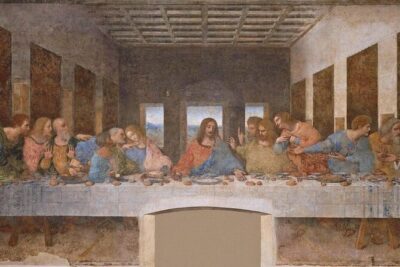
The Last Supper and Sforza Castle Tour – group tour
Read our review →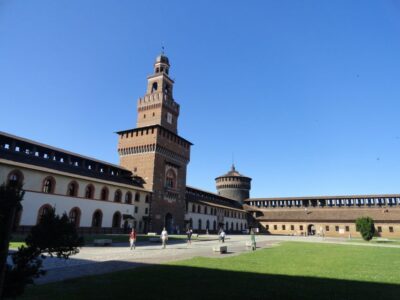
Browse the lists this tour appears in