
Reviewed · LEONARDO DA VINCI TOURS IN MILAN
Entrance to the Leonardo da Vinci Science and Technology Museum
The most surprising thing here is the scale. This is not simply a small Leonardo da Vinci display, but one of Europe’s largest science museums, spread through the cloisters of a former 16th-century Olivetan monastery. I especially like the 170 Leonardo models and manuscripts and the chance to see huge objects such as the Toti submarine, the Ebe sailing ship, and the Conte Biancamano ocean liner.
I also like the wide range of science galleries, from transport and energy to genetics, particle physics, and space exploration. The main drawback is easy to miss: if you want only Leonardo, much of the museum may feel off target, and the Leonardo section is not the entire museum.
Key points to know before you go
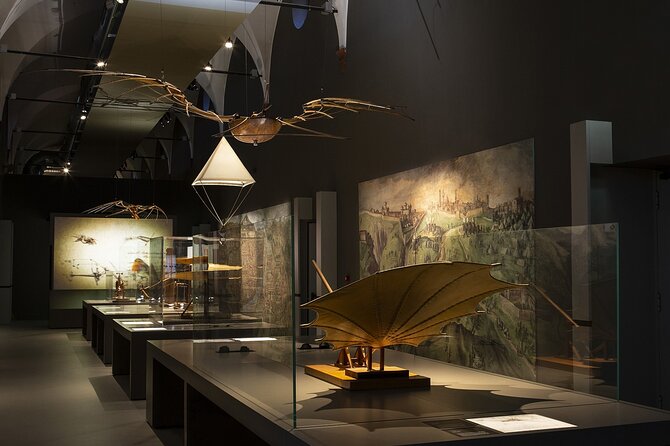
- Leonardo’s 170-model gallery: See wooden reconstructions, drawings, manuscripts, artworks, and displays explaining his work as an engineer and observer of nature.
- A museum much larger than its name suggests: Allow at least 2.5 to 3 hours if you want more than a quick look.
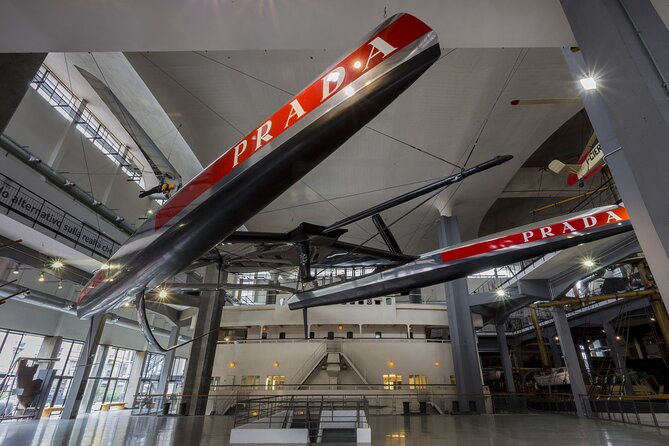
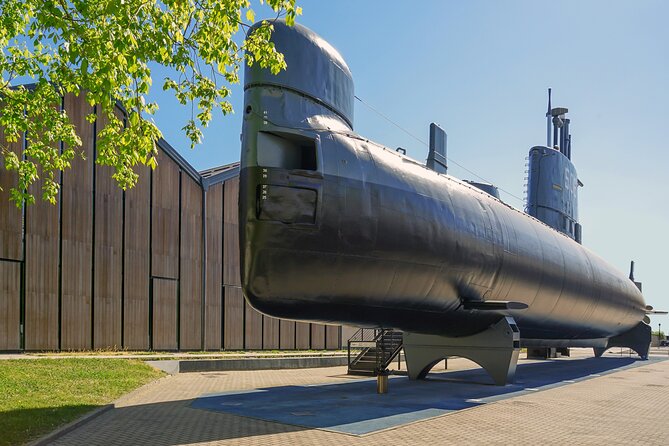
- Remarkable full-size objects: The collection includes the submarine Toti, the Luna Rossa AC72 catamaran, the Ebe schooner brigantine, and the Conte Biancamano.
- A good choice for science fans: Exhibits cover astronomy, materials, energy, transport, nutrition, biotechnology, genetics, and particle physics.
- Not the most focused Leonardo visit: If your main goal is Leonardo alone, this museum may not match the more concentrated experience you expect.
- Plan your timing carefully: The stated ticket hours run Tuesday through Friday from 10:00 a.m. to 3:30 p.m. for the published operating period, so do not leave your visit until late in the day.
What this Milan museum actually offers
The National Museum of Science and Technology Leonardo da Vinci gives you two experiences in one building. The first is a substantial presentation of Leonardo’s ideas and working methods. The second is a broad tour through science and technology, from industrial machinery to space travel.
That distinction matters. The museum’s name can make you picture room after room devoted to Leonardo. In reality, the Leonardo galleries are one major part of a much larger institution. The rest takes you through inventions, scientific discoveries, transport, energy, materials, biology, and modern technology.
I find that mix appealing because it puts Leonardo in context. His notebooks show a mind interested in anatomy, water, flight, machines, and the natural world. The later galleries show how science and engineering continued developing long after his lifetime. If you enjoy the story of how ideas become working machines, you will have plenty to see.
If you want a short art museum visit centered almost entirely on one Renaissance master, this is a different proposition. The Leonardo material is substantial, but it is not the whole outing.
More Leonardo da Vinci Tours in Milan
- Milan: Leonardo3 The World of Leonardo Museum Entry Ticket
★ 4.4 · 3,241 reviews - Best of Milan Experience Including Da Vinci’s The Last Supper and Milan Duomo
★ 4.5 · 1,516 reviews - Milan: Guided Tour of Leonardo da Vinci’s ‘The Last Supper’
★ 4.6 · 1,281 reviews
The Leonardo galleries and 170 historical models
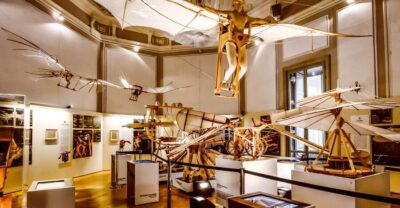
The strongest section is the permanent Leonardo exhibition. It presents around 170 historical models, along with works of art, old volumes, manuscripts, and installations. The displays follow Leonardo as an engineer, humanist, and investigator of nature rather than treating him only as the painter of the Mona Lisa.
The wooden models are particularly useful. A notebook sketch can be hard to read, even when the idea is brilliant. A three-dimensional reconstruction lets you see how Leonardo imagined gears, bridges, machines, and systems working in space. You can compare his quick observations with the practical form those ideas might take.
The exhibits also help show the range of his interests. Leonardo was not working in neat modern departments. Art, anatomy, mechanics, water, architecture, and natural observation all overlapped in his notebooks. The museum’s approach makes that connection clear.
Digital installations and videos add another layer. They help explain the drawings and give you a sense of how the models relate to Leonardo’s thinking. The presentation is not just a cabinet of old papers. It aims to show the movement from observation, to sketch, to theory, to possible machine.
Give this section enough time. A hurried pass will leave you with a few clever inventions and little sense of the larger achievement. If Leonardo is your main reason for coming, begin here while your attention is fresh.
From steam trains to the Toti submarine
The transport displays are among the museum’s most memorable sights because many objects are large enough to make you feel their physical scale. Steam trains provide an immediate look at the machines that changed travel and industry. The Toti submarine offers a different kind of engineering story, built around movement and survival underwater.
You can also see the Ebe schooner brigantine and the Conte Biancamano transatlantic liner. These objects connect technology with daily life. A ship is not only an impressive structure. It reflects the needs of passengers, crews, trade, travel, and national industry.
The AC72 Luna Rossa catamaran brings the collection closer to the present. Its shape and materials show how modern design uses speed, lightness, and precision. Placed near older machines, it helps you compare different answers to the same basic problem: how do you move people or equipment more efficiently?
The displays are valuable even if you are not a transport enthusiast. They give you a sense of scale that drawings and photographs cannot provide. At the same time, large objects take up considerable space, so you should expect less of a traditional room-by-room art museum and more of a walk through working technology.
Space, energy, and the Moon fragment
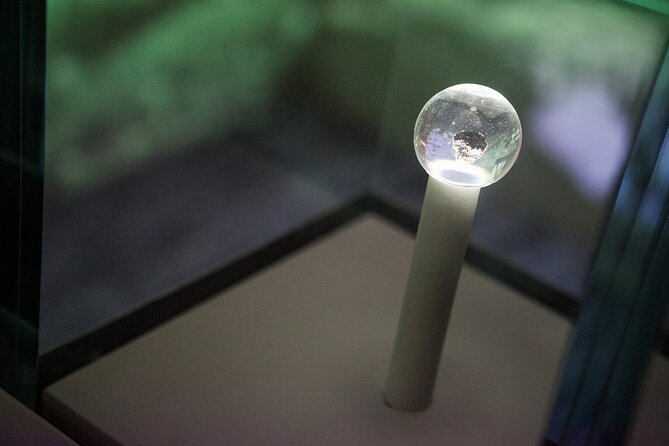
The museum also reaches far beyond mechanical inventions. Its science displays cover astronomy and space, including the Vega launcher and the only fragment of the Moon in Italy. Those objects give the museum a strong final chapter: human curiosity moving from machines on Earth to exploration beyond it.
The space material works best if you take a moment to consider the progression. Leonardo studied flight and motion with Renaissance tools. Centuries later, engineers built launch systems capable of sending instruments into orbit and beyond. The museum does not suggest that these developments are simple or direct, but it lets you see them as part of a long effort to understand and control the physical world.
Energy and materials add another practical side. You might find displays on how power is produced, how materials behave, and how technology affects everyday life. Nutrition, genetics, biotechnology, and particle physics widen the scope again.
This is one reason the museum suits older children and adults better than very young children. The subject matter is broad and technical. Some areas have interactive elements and digital installations, but the entire visit is not built around hands-on play. Young children may enjoy the trains and ships while losing interest in the explanatory sections.
More museums and galleries in Milan:
- Milan: La Scala Theater & Museum Guided Experience
★ 4.1 · 2,931 reviews - Milan: “Museo Teatrale Alla Scala” Guided Tour
★ 4.6 · 2,513 reviews - Milan: La Scala Theater and Museum Tour with Entry Tickets
★ 4.7 · 1,722 reviews - Milan: Sforza Castle and Michelangelo’s Pietà Rondanini Tour
★ 4.7 · 1,119 reviews
The 16th-century monastery setting
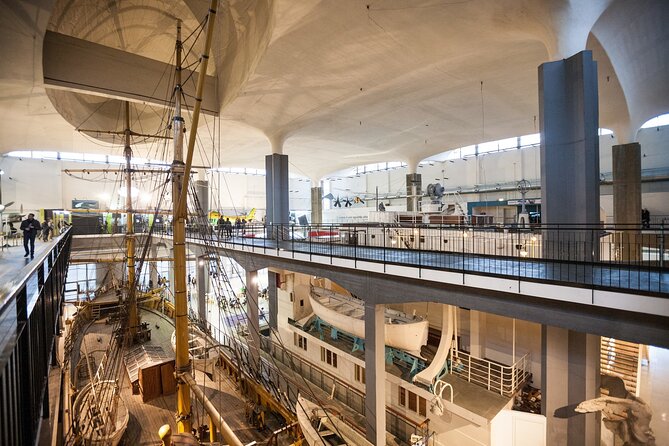
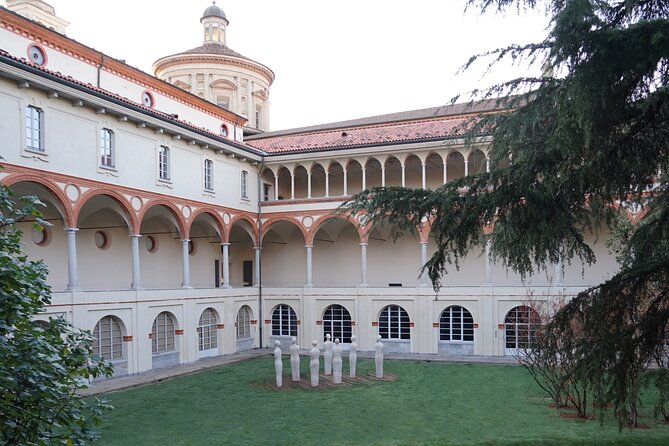
The building itself changes the mood of the visit. The museum occupies the cloisters of a 16th-century Olivetan monastery, so you move between old architectural spaces and displays about modern engineering. That contrast is part of the pleasure.
It also keeps the museum from feeling like a plain contemporary exhibition hall. You are looking at industrial machinery and space technology inside a historic religious complex. The setting reminds you that ideas and institutions change over time, even when the basic human urge to understand the world stays much the same.
The building is large. Clear arrows on the floor help guide you through the exhibits and reduce the sense of confusion that can come with a big collection. Follow the route at first, then return to sections that deserve more time.
Do not expect to see everything in one quick hour. A short visit can cover the headline objects, but it will leave out much of the explanatory material and several scientific departments.
How much time should you allow?
The stated visit length is about one to three hours, but I would treat one hour as a quick skim rather than a proper visit. For the Leonardo galleries plus a selection of the major science displays, plan around 2.5 to 3 hours.
If you enjoy science, transport, or technology, you may want longer. The museum is bigger than many first-time visitors expect, and the collection includes enough large objects and specialist displays to slow you down.
Timing is especially important because the published hours for the stated operating period list Tuesday through Friday from 10:00 a.m. to 3:30 p.m. Some information associated with the museum indicates closing times later in the afternoon, but the safest approach is to trust the hours shown for your selected date and arrive early.
Do not schedule a late afternoon entry unless you have confirmed the closing time. A visit beginning around 4:00 p.m. can leave you with too little time, especially if staff begin clearing galleries before the formal closing hour. Arriving near opening gives you a calmer start and more freedom to choose which areas deserve your time.
Is the $15.69 admission good value?
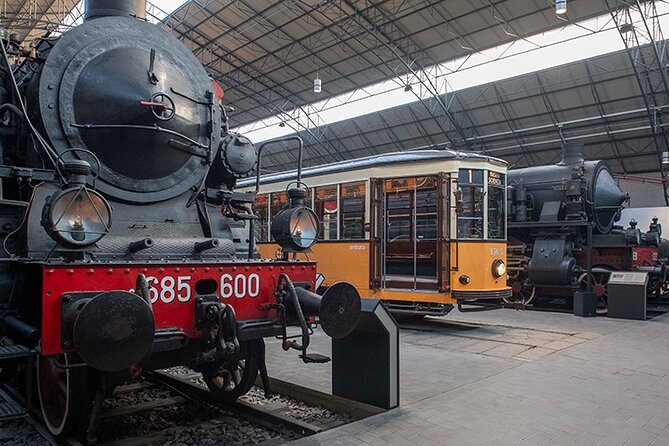
At about $15.69 per person, this is a reasonable price for the amount of material on display. You are not paying for a short, single-room Leonardo exhibit. Your admission covers the Leonardo galleries and the broader museum, including major transport objects, space displays, scientific exhibits, and digital installations.
The value depends on your interests. For a person who likes engineering, science, inventions, or the development of transport, the price is easy to justify because the visit can fill several hours. The same price may feel less worthwhile if you are expecting a concentrated gallery of Leonardo paintings and original masterpieces.
There is also value in the flexibility of the format. You can make a short visit focused on Leonardo, or stay longer and follow the museum’s full story from early machines to modern science. That choice makes the ticket more useful than a narrowly timed attraction.
The building’s scale and the large objects are part of what you are buying. A book can show Leonardo’s sketches, but it cannot give you the same sense of size as a locomotive, submarine, sailing ship, or launch vehicle.
Who will enjoy this most?
I would recommend the museum most strongly to:
- Adults interested in science, engineering, and invention
- Older children and teenagers who can read and follow technical explanations
- Visitors who want more than paintings and churches in Milan
- Anyone who enjoys comparing old machines with modern technology
- People with enough time for a two-and-a-half-hour visit or longer
It is also a useful stop after seeing Leonardo-related sights elsewhere in Milan, because it gives you a different view of him. Here, he is presented less as a painter and more as a designer, engineer, and careful observer.
I would be more cautious about bringing children under 10 if your only goal is interactive entertainment. Some exhibits are engaging, but the museum is not interactive enough throughout to hold every young child’s attention. There is no restaurant operating in the information provided, and vending machines may be the main food option if facilities remain under renovation, so plan around your meal.
Descriptions are available in Italian and English. That makes the museum workable for English-speaking visitors, but you should not expect every language to be represented.
Location and getting there
The entrance is at Via San Vittore 21, 20123 Milano MI, Italy. The museum is near public transportation, which makes it practical to combine with other central Milan sights.
Its location also works well for a day built around Leonardo. The museum is close to the Last Supper, although you should not confuse this museum with the Leonardo3 Museum near the Galleria. Those are separate attractions with different aims.
The Leonardo3 Museum offers a more concentrated look at Leonardo’s world. The National Museum of Science and Technology offers a much broader journey through science and technology, with Leonardo as a major section rather than the sole subject. Check the address before you set out, particularly if your day includes more than one Leonardo-related booking.
Booking, entry, and cancellation details
Confirmation is provided at the time of booking. Service animals are allowed, and most people can participate without special restrictions. The museum is near public transportation, so you do not need to build your day around a complicated transfer.
Free cancellation is available when you cancel at least 24 hours before the experience start time. If you cancel later than that, the amount paid is not refunded, and changes made inside the 24-hour window are not accepted. The cut-off follows local Milan time.
Because the museum is large, I would book with a realistic time in mind rather than choosing the latest available entry. Getting there early is the simplest way to protect your visit from an early gallery closing or an unexpectedly slow start.
Should you book the Leonardo Science and Technology Museum?
Book it if you want Leonardo plus the story of science and technology. The models, manuscripts, digital material, trains, ships, submarine, launch vehicle, and Moon fragment give you a substantial visit for the price.
Skip it if you want only Leonardo paintings or a compact, highly focused exhibition. In that case, a more specialized Leonardo attraction may fit your plans better.
For most curious adults and older children, I think the museum earns its place in a Milan itinerary. Just allow at least 2.5 hours, arrive well before the stated afternoon cut-off, and understand what you are buying: not a Leonardo-only museum, but a broad science museum with an excellent Leonardo center.
FAQ
Where is the Leonardo da Vinci Science and Technology Museum?
The museum is at Via San Vittore 21, 20123 Milan, Italy.
How much does admission cost?
The listed price is $15.69 per person.
How long does a visit take?
The estimated duration is one to three hours, but allowing 2.5 to 3 hours gives you time to see the Leonardo galleries and several other departments properly.
What are the published opening hours?
For the stated period from February 1, 2026, to January 26, 2027, the listed hours are Tuesday through Friday from 10:00 a.m. to 3:30 p.m.
Is the Leonardo section the whole museum?
No. The Leonardo galleries are one major section. The museum also covers transport, astronomy and space, energy, materials, nutrition, genetics, biotechnology, and particle physics.
What can I see in the Leonardo galleries?
You can see 170 historical models, works of art, ancient volumes, manuscripts, installations, digital displays, and material about Leonardo as an engineer, humanist, and investigator of nature.
Is the museum suitable for young children?
Most people can participate, but the museum may suit older children better. The information provided notes that children aged 10 and under may find it insufficiently interactive.
Can I cancel for a full refund?
Yes. You can cancel for a full refund up to 24 hours before the experience start time. Cancellations and changes made less than 24 hours before the start time are not accepted for a refund.
More Museums in Milan
- Milan: Cathedral, Archeological Area and Museum Ticket
★ 4.5 · 1,093 reviews - Casa Milan: Museum Entry Ticket
★ 4.6 · 969 reviews - Milan: Entrance Ticket to La Scala Theatre Museum
★ 4.4 · 759 reviews - La Scala Theatre and Museum guided experience
★ 4.5 · 664 reviews
Just added around Milan
- Visit of Verona and Lake Garda. Full day tour from Milan★ 4.6 · 5 reviews
- From Milan: Villa del Balbianello and Varenna by Train★ 4.2 · 27 reviews
- Explore History and Style with this Walking Tour in Milano★ 5.0 · 15 reviews
- Trekking in the Wood with picnic on the turtles lake★ 5.0 · 9 reviews
- Hot air balloon flight Milan Monday-Friday★ 5.0 · 18 reviews
- Trekking in the Wood with picnic on the turtles lake★ 5.0 · 8 reviews
- LINATE – MILANO airport transfer★ 4.5 · 14 reviews
- Lake Como trekking private guided tour, from Milan★ 5.0 · 9 reviews
Leonardo da Vinci Tours in Milan, compared.
Leonardo3 The World of Leonardo Museum Entry Ticket
Read our review →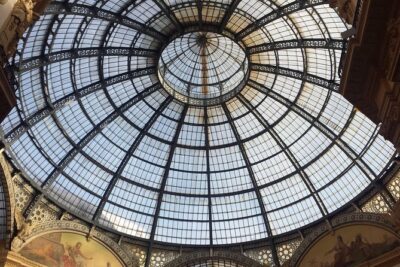
Best of Milan Experience Including Da Vinci’s The Last Supper and Milan Duomo
Read our review →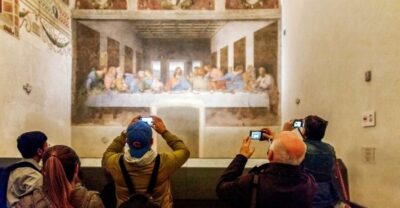
Guided Tour of Leonardo da Vinci’s ‘The Last Supper’
Read our review →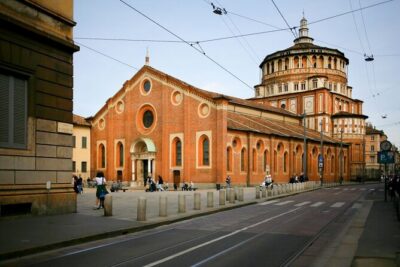
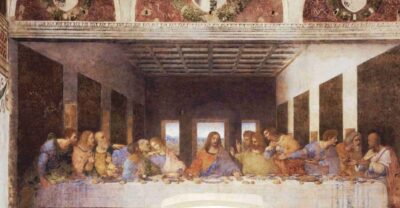
Leonardo’s Last Supper and Michelangelo’s Pietà Tour
Read our review →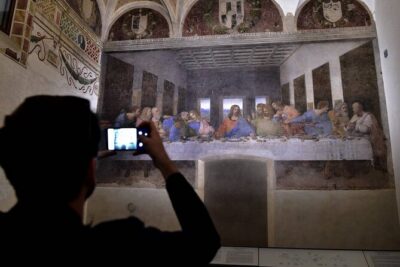
Experience Da Vinci’s Last Supper: Tickets & Guided Tour
Read our review →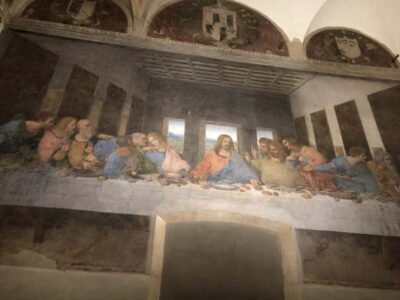
Da Vinci’s Last Supper Express Semi-Private Guided Tour
Read our review →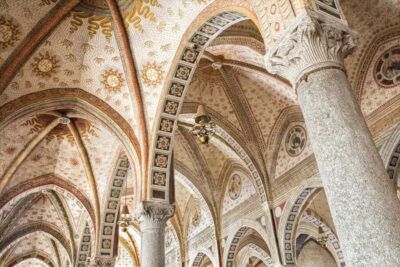
Browse the lists this tour appears in