
Reviewed · MILAN MUSEUM & ART TOURS
Milan: Street Art Tour of Ortica, Milan’s open air museum
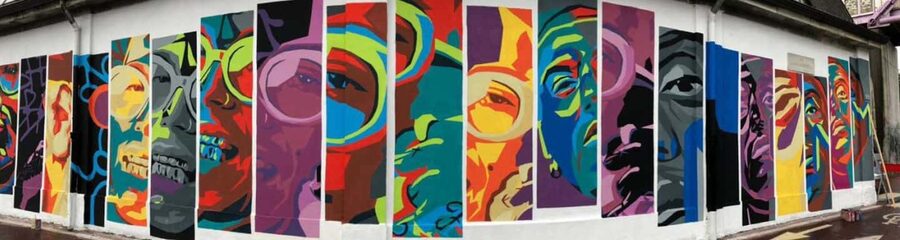
Ortica’s murals do more than brighten old walls. They tell Milan’s story through workers, musicians, activists, partisans, and other local figures, turning a once-forgotten district into Milan’s first open-air museum. I like the focus on the people behind the paint, and I like the small group size, which gives you room to ask questions. The main drawback is that one tour may not cover as many mural buildings as you expect.
You’ll walk with an English-speaking guide from Argonne metro into Ortica, learning how graffiti grew from underground expression into a recognized art form. Guides Lucy and Luca have both made a strong impression, with Lucy praised for her warmth and enthusiasm and Luca for being easy to talk to and well informed. Wear good shoes, and bring weather-ready clothing.
Key points at a glance
- Ortica’s Or.Me. project: More than 20 large murals connect local walls with Milanese memory.
- A small eight-person group: You get a more personal walk than on a large city tour.
- A story-led route: The art covers workers, musicians, feminist figures, activists, and anti-fascist partisans.
- A changing neighborhood: You see how public art can help reshape a working-class district.
- Two hours on foot: The route includes guided walks, photo stops, free time, and a final viewpoint.
- A practical meeting point: Start outside Argonne station on Milan’s M4 metro line.
Why Ortica makes a good street art stop
Milan is often associated with grand architecture, fashion, design, and polished shopping streets. Ortica gives you a different city. It grew around railway lines, viaducts, industrial activity, and the Lambro River, and it was long seen as an isolated working-class area.
That setting matters. Street art here is not simply a collection of attractive walls placed for visitors. The murals respond to the identity of the neighborhood and to Milan’s wider social story. You see public art used as a way to remember people who might otherwise disappear from the official version of the city.
The central project is called Or.Me., short for Ortica Memoria. The local artist collective Orticanoodles created more than 20 large-scale murals, with local residents involved in the wider storytelling process. Each work forms part of a larger account of Milan, including its workers, musicians, political figures, activists, and everyday heroes.
I like this approach because it gives you something to think about after the paint catches your eye. You are not just asking whether a mural looks good. You are also asking who is represented, what the neighborhood wants to remember, and how art changes the way you see an ordinary street.
More museums and galleries in Milan:
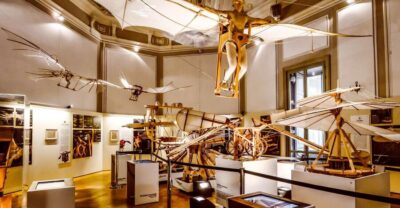
- Milan: Leonardo3 The World of Leonardo Museum Entry Ticket
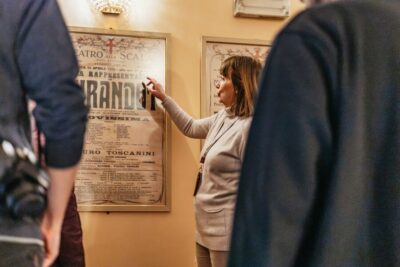
★ 4.4 · 3,241 reviews - Milan: La Scala Theater & Museum Guided Experience
★ 4.1 · 2,931 reviews - Milan: “Museo Teatrale Alla Scala” Guided Tour
★ 4.6 · 2,513 reviews
From Argonne station into Ortica
The tour begins outside Argonne metro station on line M4. Look for the guide carrying the agency logo. This is a useful meeting point because you can reach it by public transport, but getting to and from the activity is not included in the price, so allow time for your own metro journey.
The first guided section lasts about 15 minutes. Treat it as your introduction to the district and to the idea behind the tour. Your guide sets up the basic story of Ortica and explains why this part of Milan became a suitable place for a major public art project.
The route then continues into Ortica for a longer 45-minute guided segment. This is where the tour begins to feel less like a general introduction and more like a focused neighborhood walk. You move through streets and back lanes while your guide explains the development of street art, its early rebellious image, and its later acceptance as a serious cultural form.
You should not expect a museum with rooms, labels, and a fixed indoor route. The walls are spread across the district. That makes the experience more active, but it also means the pace depends on walking between works and listening outdoors.
Reading the Or.Me. murals with a local guide
The murals are the heart of the experience. Their subjects include anti-fascist partisans, jazz legends, factory workers, feminist figures, and other people tied to Milan’s cultural and social life. The works are meant to be read as pieces of collective memory, not only judged as large paintings.
A guide adds real value here. Without context, you may notice color, scale, and technique but miss why a person or event appears on the wall. The tour explains the stories behind the images and shows how different styles and methods are used in modern street art.
The discussion also covers the social role of public art. A simple tag, a carefully planned mural, and a large community project do not serve the same purpose. You learn how street art can begin as personal or political expression, then become part of a neighborhood’s identity and urban renewal.
This is where Lucy and Luca matter. Lucy led one particularly warm and enthusiastic tour, while Luca was praised for being informative and easy to chat with. The small group limit of eight should help you hear the explanation and ask about a work that catches your attention.
Still, keep your expectations measured. The route description promises the most creative and meaningful works in Ortica, but one two-hour walk cannot show every mural in the district. One account of the experience specifically wished for more street art buildings. If your main goal is quantity, you may leave wanting a longer route.
The 10-minute photo stop
After the main 45-minute section, the itinerary includes a 10-minute photo stop. This gives you a clear chance to look carefully at the murals rather than trying to photograph them while the group is moving.
Photography is encouraged, but the setting calls for basic courtesy. Do not block entrances, crowd the artwork, or treat the neighborhood as a studio set. These are public walls in a lived-in district, not isolated exhibits.
The short photo stop is also a useful moment to notice scale. Large murals can look different through a phone screen than they do when you stand below them. Take a few wide shots, then look at smaller details and faces before the group moves on.
A few more Milan tours and experiences worth a look
- Street Art&Urban Vibes in Milan’s Most Exciting Rising Areas
★ 4.4 · 5 reviews
Ten minutes of free time in Ortica
The tour allows about 10 minutes of free time in Ortica. That is enough to take another look, make a few photographs, or simply absorb the setting without a running explanation.
I appreciate this pause because guided walks can sometimes feel tightly packed. A little free time gives you control over what interests you most. If one mural speaks to you more than another, you can spend a moment with it instead of following a fixed lecture.
Do not expect a long café break or a meal stop. Food and drinks are not included, and the free period is brief. Plan to eat before or after the activity if you need more than a quick pause.
The final guided sections and viewpoint
The later route includes a 20-minute guided segment followed by another 10-minute explanation. These sections continue the account of Ortica’s transformation and the cultural role of its street art.
The final 10-minute photo stop takes place at a viewpoint. The exact view is not specified, so I would not book this tour expecting a famous Milan skyline panorama. Think of it as a closing place to take in the area and finish the visual side of the walk.
Together, the listed sections add up to two hours: 15 minutes at the start, 45 minutes in Ortica, a 10-minute photo stop, 10 minutes of free time, then 20 minutes, 10 minutes, and a final 10-minute viewpoint stop. The structure gives you a good mix of explanation, looking, and walking, rather than two straight hours of talking.
What the route says about urban change
The most valuable idea here is not that paint can make a street prettier. It is that public art can change how people understand the place where they live.
Ortica was shaped by infrastructure and industry, with railway tracks, viaducts, and the Lambro River contributing to its separation from central Milan. The Or.Me. project uses those everyday surroundings as a setting for memory. The neighborhood becomes a place where history is visible on the walls rather than confined to a book or formal museum.
That does not mean the tour presents art as a magic fix for every urban problem. A mural cannot erase the past or solve the practical issues facing a district. But it can give local identity a public face, encourage discussion, and make overlooked streets worth noticing.
I find that angle more useful than a standard list of famous pieces. You leave with a better sense of how a city can tell its story outside grand monuments and official galleries.
Is $49 a fair price?
At $49 per person, this is not the cheapest way to see Milan’s public art. You are paying for a two-hour English-language tour, a small group capped at eight, and interpretation of a specific neighborhood project.
The value depends on how much context you want. If you are happy to wander alone and photograph walls without explanation, you can save money by exploring independently. If you want to understand the people, politics, techniques, and neighborhood stories behind the murals, the guide makes the fee easier to justify.
The small group is important. Eight people is intimate enough for questions and easier to manage on narrow streets. It also avoids the distant feeling that can come with a large crowd gathered around a wall.
You should also factor in your own transport costs, since the walk does not include travel to or from Argonne. There is no food or drink included either. The tour makes the most financial sense as a focused cultural activity, not as an all-day excursion.
Who will enjoy this walk most?
I would recommend it to you if you like cities as living places rather than collections of famous sights. It suits anyone interested in street art, local memory, urban change, photography, Milanese culture, or neighborhoods beyond the usual center.
It also works well for repeat visitors who have already seen the Duomo, Galleria, and central museums. Ortica gives you a different side of Milan, with a more local and less polished feel.
Families with older children and teenagers may find the large-scale art easier to engage with than a formal history lecture. The route gives them images to look at while the guide explains the stories behind them.
You should think twice if you dislike walking, need constant indoor shelter, or want a large number of murals packed into a short period. Although the activity is listed as wheelchair accessible, you should still check the route details at booking if specific mobility needs are important to you.
Wear comfortable shoes. Check the forecast before leaving, since the tour can be rescheduled in bad weather and much of the experience takes place outdoors.
Should you book the Ortica street art tour?
Book it if you want a thoughtful look at Milan’s public art and do not mind leaving the postcard center. The strongest part is the connection between mural, memory, and neighborhood. Lucy and Luca also bring the kind of personal guidance that helps a short walk feel more human.
Do not book it mainly for a fast checklist of street art buildings. The route may not show as many works as you hope, and the experience depends more on stories and interpretation than on nonstop photo stops.
For $49, I see it as a good choice for a small-group cultural walk, especially if you value context and local voices. Give yourself extra time before or after to reach Argonne, wear sensible shoes, and arrive ready to look beyond the paint.
FAQ
Where does the Ortica street art tour begin?
The meeting point is outside Argonne metro station on Milan’s M4 line. Your guide will be carrying the agency logo.
How long does the tour last?
The tour lasts two hours.
What language is the tour conducted in?
The live tour guide speaks English.
How many people can join the group?
The group is limited to eight participants.
What is the Or.Me. project?
Or.Me., meaning Ortica Memoria, is a large urban art project created by the local collective Orticanoodles. It includes more than 20 murals about Milanese people, events, and shared memory.
What subjects do the murals cover?
The murals include subjects such as anti-fascist partisans, jazz legends, factory workers, activists, and feminist figures.
Is transportation included?
No. Transportation to and from the activity is not included.
Is the tour wheelchair accessible?
Yes, the activity is listed as wheelchair accessible.
What should I bring or wear?
Wear comfortable shoes and dress for the weather. Photography is encouraged, but you should respect the artwork and the neighborhood.
More Museums in Milan
- Milan: La Scala Theater and Museum Tour with Entry Tickets
★ 4.7 · 1,722 reviews - Milan: Cathedral, Archeological Area and Museum Ticket
★ 4.5 · 1,093 reviews - Casa Milan: Museum Entry Ticket
★ 4.6 · 969 reviews - Milan: Entrance Ticket to La Scala Theatre Museum
★ 4.4 · 759 reviews
Just added around Milan
- Visit of Verona and Lake Garda. Full day tour from Milan★ 4.6 · 5 reviews
- From Milan: Villa del Balbianello and Varenna by Train★ 4.2 · 27 reviews
- Explore History and Style with this Walking Tour in Milano★ 5.0 · 15 reviews
- Trekking in the Wood with picnic on the turtles lake★ 5.0 · 9 reviews
- LINATE – MILANO airport transfer★ 4.5 · 14 reviews
- Hot air balloon flight Milan Monday-Friday★ 5.0 · 18 reviews
- Trekking in the Wood with picnic on the turtles lake★ 5.0 · 8 reviews
- Lake Como trekking private guided tour, from Milan★ 5.0 · 9 reviews
Milan Museum & Art Tours, compared.
Leonardo3 The World of Leonardo Museum Entry Ticket
Read our review →
La Scala Theater and Museum Tour with Entry Tickets
Read our review →
Sforza Castle and Michelangelo’s Pietà Rondanini Tour
Read our review →
Cathedral, Archeological Area and Museum Ticket
Read our review →
Browse the lists this tour appears in