
Reviewed · MILAN WINE TASTING TOURS
3 Italian sparkling wines and how to distinguish them: Prosecco, Franciacorta..
The clever part of this Milan wine experience is that you do not simply taste three glasses and move on. You taste three Italian sparkling wines made by three different methods, then learn how those methods shape aroma, texture, bubbles, quality, and price. Prosecco and Franciacorta are part of the story, but the wider lesson is how Italian sparkling wine gets its fizz.
I like two things right away. First, Cornelia explains wine in plain language, making room for beginner questions as well as more advanced discussion. Second, the private format means your group can focus on what interests you, from identifying good quality to understanding why one bottle costs more than another. The main consideration is price: at $112.38 per person for about two hours, this is a serious tasting rather than a quick aperitivo.
Key points at a glance
- Three production methods: Compare the ancestral style, Martinotti or Charmat method, and traditional method in one sitting.
- Prosecco and Franciacorta context: Learn how Italy’s best-known sparkling names fit into a wider world of Italian bubbles.
- Cornelia as your host: Expect clear explanations, beginner-friendly answers, and a guide who enjoys teaching the details.
- Private group setting: Only your party takes part, which suits solo visitors, couples, families, or small groups.
- Milan views: The tasting takes place in a location with attractive city views, adding atmosphere beyond the wine itself.
- Simple logistics: Meet at Piazza Fontana at 5 pm, and finish back at the same meeting point after roughly two hours.
Why Three Italian Bubbles Tell a Bigger Story

Many visitors arrive in Italy knowing Prosecco. Some know Franciacorta. Fewer understand why two sparkling wines can taste and feel so different even when both are served cold in a flute.
That is the useful idea behind this tasting. The session links the wine in your glass to the way it was made. You learn about the ancestral method, the Martinotti or Charmat method, and the traditional method. These are not just technical labels. They affect how long the wine takes to produce, how much contact it has with yeast, how fine the bubbles feel, and how much the bottle may cost.
The experience also introduces terms such as dosage and perlage. Dosage concerns the final adjustment of sweetness in sparkling wine. Perlage describes the bubbles themselves, including their appearance and persistence. You do not need a strong wine vocabulary before arriving. The point is to leave with a better one.
I like this approach because it gives you a tool you can use later. At a restaurant or wine shop, you will be better prepared to ask why a bottle tastes bready, fresh, creamy, dry, or fruit-forward. You will also have a clearer idea of what you are paying for.
More wine tastings around Milan:
- Milan: Pasta and Tiramisu Cooking Class with Wine
★ 4.8 · 1,106 reviews - Gnocchi, Pasta, Tiramisù and Wine Class
★ 5.0 · 691 reviews - Small-Group Barolo Wine Tasting, Alba & UNESCO Piedmont Hills
★ 5.0 · 689 reviews
What Happens at Piazza Fontana at 5 pm
The experience begins at Piazza Fontana in central Milan at 5 pm. You should arrive with enough time to find the meeting point without rushing. The tour ends back there after about two hours, so it fits neatly into an evening before dinner.
The meeting point is practical for anyone already exploring central Milan, though the activity itself is not presented as a walking tour of the square or nearby monuments. The focus is wine education and tasting. Do not book this expecting several vineyard visits or a countryside excursion. You are getting a compact city-based class with drinks, discussion, and a view.
The English-language format makes the session easy to follow for international visitors. Since the activity is private, only your group participates. That matters more than it might seem. In a large wine class, the pace has to suit everyone. Here, you can ask a basic question about sweetness or a more detailed one about fermentation without worrying about holding up a busload of people.
The format also works well for a solo visit. One solo participant shared the session with two people traveling together, which suggests the atmosphere can remain social without requiring you to arrive with a full party. Couples and small groups should find the private setup particularly comfortable.
The Ancestral Method: The Oldest Style in the Lineup
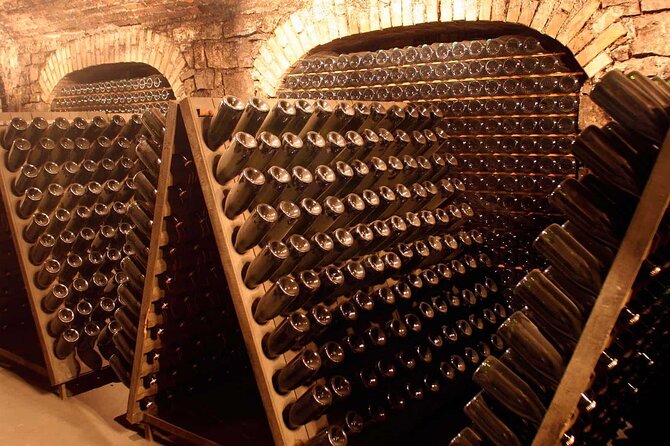
The first production style is the ancestral method. As the name suggests, it is linked to an older way of making sparkling wine. The lesson here is not simply that the method is old. You learn how a less industrial approach can create a different kind of wine and a different drinking experience.
This is a useful starting point because it gives you a reference point. Instead of treating every bubble as polished and identical, you begin to notice variation. The wine may show a different level of freshness, texture, or rustic character from what you expect in a widely distributed sparkling bottle.
The important thing is how Cornelia connects the method to the glass. You are not asked to memorize a production chart. You taste, observe, and compare. You may find yourself paying attention to the size of the bubbles, the scent before tasting, and the way the wine feels on your tongue.
The ancestral method may appeal most to people who like wines with a strong sense of process and personality. It may be less suited to someone who wants every sparkling wine to taste crisp, light, and predictable. That contrast is valuable. A tasting should show difference, not offer three versions of the same drink.
The Martinotti or Charmat Method: The Prosecco Connection
The Martinotti method, also called the Charmat method, is central to understanding Prosecco. Rather than completing the second fermentation in each individual bottle, this method uses a pressurized tank. The wine can then be bottled while preserving its fresh, fruit-led character.
You do not need to remember every technical step. The key point is that the method influences the style. Prosecco is often associated with lively freshness, floral or fruit notes, and an easy-drinking feel. The Charmat method helps explain why it can offer that profile at a different price from a traditional-method wine.
This section is especially helpful if you already order Prosecco but have never thought about how it is made. You learn to separate the name of the wine from the production method. That is a small but important distinction. Not every Italian sparkling wine is Prosecco, and not every difference in price is a matter of branding.
Cornelia also explains how to judge quality. That is more useful than simply being told which bottle is the best. You can consider balance, freshness, bubble texture, and finish. You may also begin to notice that an inexpensive wine can be enjoyable in its own way, while a more expensive one may offer greater complexity or length.
For many people, this will be the most familiar part of the tasting. Prosecco is widely available, so you can carry the lesson home. After the experience, you may approach a wine list with more confidence and ask whether a bottle is dry, what method was used, and what style the producer intended.
A different sort of day out of Milan entirely:
- Milan: Cathedral and Duomo’s Terraces Entrance Ticket
★ 4.6 · 61,054 reviews - Milan: City Sightseeing Hop-On Hop-Off Bus with Audio Guide
★ 4.0 · 6,256 reviews - Milan Cathedral: Duomo Terraces Ticket (No Church Access)
★ 4.6 · 6,111 reviews - Milan: Milan Cathedral Direct Entrance – Terrace Excluded
★ 4.5 · 5,782 reviews
The Traditional Method: Where Franciacorta Fits
The traditional method is the style most closely linked with higher-end sparkling wine. Here, the second fermentation takes place in the bottle. The wine spends time with its yeast before being prepared for sale, a process that can add texture and more developed aromas.
This is where Franciacorta enters the discussion. Franciacorta comes from Lombardy, the region that includes Milan, and it is Italy’s best-known traditional-method sparkling wine. The tasting gives you a way to place Franciacorta beside Prosecco rather than treating them as interchangeable alternatives.
You may notice a finer or more persistent perlage, along with added complexity from time in the bottle. The wine can feel more structured and serious. That does not mean it is automatically better for every occasion. A light Prosecco may be exactly right for a casual aperitivo, while Franciacorta may suit a meal or a slower tasting.
The point is to understand the tradeoff. The traditional method usually takes more time and work. Those costs can influence the final price. You are not paying only for a famous region or an elegant label. You may also be paying for longer production and a more layered style.
I particularly like having this comparison explained in Milan rather than far from Lombardy. You are learning about a regional wine with a direct connection to northern Italy, while also looking beyond the usual tourist drink. The experience does not require a trip to Franciacorta, but it gives you a reason to seek it out later.
How the Tasting Teaches You to Use Your Senses
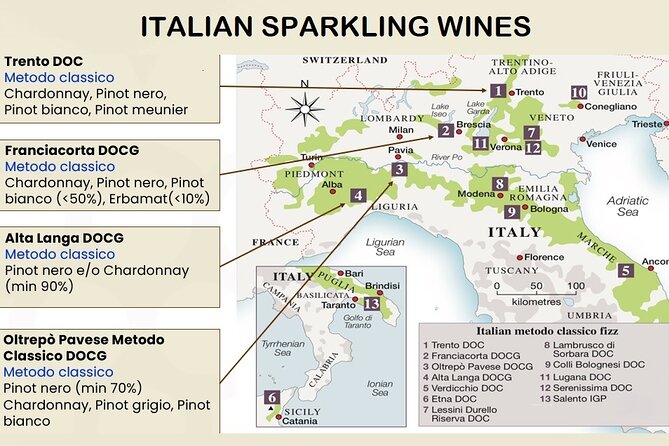
This is not a session built around obscure wine terms. Cornelia guides you through the basic mechanics of tasting and shows how your senses inform your opinion. That makes it suitable for someone who likes sparkling wine but cannot explain why one bottle works and another does not.
You will likely consider several simple points:
- What does the wine smell like before you taste it?
- How lively or soft are the bubbles?
- Does the wine feel light, creamy, sharp, or rounded?
- Is it dry, sweet, or somewhere in between?
- How long does the flavor remain after you swallow?
These questions help you move past the idea that a sparkling wine is judged only by how festive it looks. The bubbles matter, but so do freshness, balance, aroma, and finish.
The session also gives you permission to have your own preference. You might prefer the fresh fruit character of Prosecco to the more serious feel of Franciacorta. You might favor the unusual character of the ancestral wine. There is no need to announce a winner. The useful outcome is knowing why you prefer one.
That beginner-friendly tone is one of the experience’s strongest points. You can ask basic questions without feeling out of place. At the same time, the discussion of production methods, dosage, and perlage gives experienced wine drinkers enough substance to stay interested.
The Milan View Adds Atmosphere, but Wine Remains the Focus
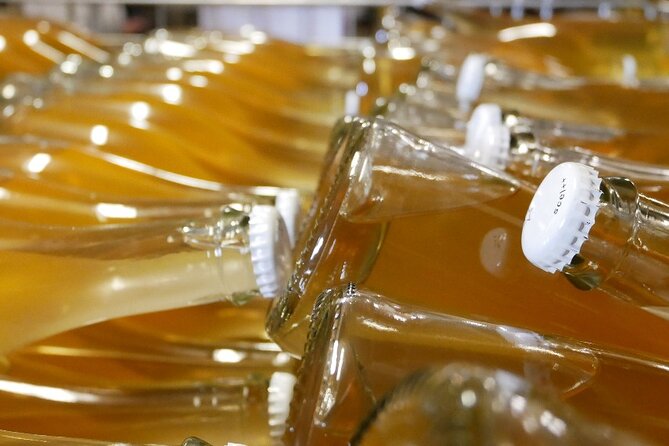
The tasting location offers views across Milan, which gives the two-hour session a pleasant sense of place. A city view can make the experience feel more connected to your visit than a generic classroom would.
Still, keep your expectations measured. The location is described as having attractive views, but no specific landmark or terrace details are provided. Book this for the wine lesson first, and treat the view as an added pleasure rather than the main attraction.
The setting may be especially welcome after a day of museums and churches. You can sit down, slow the pace, and focus on a subject that is closely tied to Italian food culture. Because the activity starts at 5 pm, it also works as a bridge between sightseeing and dinner.
There is a practical limit here. You are tasting in Milan, not touring a winery. If your dream is to walk through vineyards, inspect cellar equipment, and meet producers at the source, this experience will not replace a trip into the countryside. If you want a well-organized introduction without leaving the city, the format makes more sense.
Is $112.38 a Fair Price for Two Hours?
At $112.38 per person, this is not a budget wine tasting. The value depends on what you want from the experience.
You are paying for a private activity, an English-speaking guide, three sparkling wines made by different methods, and a structured lesson rather than a simple pour-and-go event. The session also aims to teach you how production affects quality and price, which gives it more lasting value than a tasting based only on quantity.
The price will feel more reasonable if you enjoy wine education, want personal attention, or are traveling with a small group. A private format can be worth paying for when you want to ask questions and set the pace. It is also a good choice if standard wine tastings have started to feel repetitive.
The value is weaker if you mainly want inexpensive drinks before dinner. You could spend less on a casual glass of Prosecco. You would not get the same comparison of methods or the same focused instruction, but that may be all you need.
Group discounts are available, though the exact reduced price is not provided. Check the current rate for your party before booking. The free cancellation policy allows you to cancel up to 24 hours before the start for a full refund, which gives you some flexibility if your Milan plans change.
Who Should Book This Sparkling Wine Experience?
I would point this toward several types of visitors. First are people who already enjoy Prosecco and want to understand what separates it from other Italian sparkling wines. You will gain a clearer view of where the Charmat method fits and why Franciacorta is a different proposition.
It also suits beginners. You do not need prior wine training, and the teaching style welcomes basic questions. If the words dosage and perlage sound like code, that is not a problem. They are part of what you will learn.
Solo visitors can book with confidence because the activity is suitable for one person. Couples and small groups will appreciate the private setting, especially if some people are serious about wine while others simply want an enjoyable evening.
I would be more cautious if you dislike structured tastings, do not drink alcohol, or want a full-day food and wine excursion. Anyone under 18 may attend the activity but will not be served alcoholic beverages under Italian law. Service animals are allowed, and the meeting point is near public transportation.
Final Call: A Smart Pick for Curious Wine Drinkers
Book this experience if you want more than three glasses of sparkling wine. Cornelia’s clear teaching, the private format, the Milan views, and the comparison of three production methods give the tasting a real purpose.
Skip it if you are looking for a cheap aperitivo or a countryside winery visit. At $112.38, the price asks you to value instruction and personal attention. For a wine-curious visitor, especially one who likes Prosecco but wants to understand Franciacorta and lesser-known styles, that is a fair reason to say yes.
FAQ
Where does the sparkling wine experience begin?
It begins at Piazza Fontana, 20122 Milano MI, Italy.
What time does the activity start?
The start time is 5 pm.
How long does the experience last?
The experience lasts approximately two hours.
Where does the activity end?
It ends back at the meeting point at Piazza Fontana.
Which wines and production methods are covered?
You taste three Italian sparkling wines made with the ancestral method, the Martinotti or Charmat method, and the traditional method. Prosecco and Franciacorta are part of the discussion.
Is the experience offered in English?
Yes. The experience is offered in English.
Is this a private activity?
Yes. Only your group participates.
Can I cancel for a full refund?
Yes. You can cancel at least 24 hours before the start time for a full refund. Cancellations made less than 24 hours in advance are not refunded.
Just added around Milan
- Visit of Verona and Lake Garda. Full day tour from Milan★ 4.6 · 5 reviews
- From Milan: Villa del Balbianello and Varenna by Train★ 4.2 · 27 reviews
- Explore History and Style with this Walking Tour in Milano★ 5.0 · 15 reviews
- Trekking in the Wood with picnic on the turtles lake★ 5.0 · 9 reviews
- Hot air balloon flight Milan Monday-Friday★ 5.0 · 18 reviews
- Trekking in the Wood with picnic on the turtles lake★ 5.0 · 8 reviews
- LINATE – MILANO airport transfer★ 4.5 · 14 reviews
- Lake Como trekking private guided tour, from Milan★ 5.0 · 9 reviews
Milan Wine Tasting Tours, compared.
Small-Group Barolo Wine Tasting, Alba & UNESCO Piedmont Hills
Read our review →
Pasta and Tiramisu Small Group Cooking Class with Wine
Read our review →
Wine Lovers Experience at Cantina Urbana Winery
Read our review →
Pizza Cooking Class with Tiramisù and Wine Tasting in Milan
Read our review →
Browse the lists this tour appears in